Category archive

health - page 2

Coronavirus Prompts PM into Obesity Crackdown
in health

New measures to curb obesity is set to be announced by the prime minister next week, and they are expected to include a ban on TV junk food adverts before 21:00.

It comes amid growing evidence people who are overweight or obese are at greater risk from coronavirus.

The measures are yet to be finalised but are also likely to include a ban on online ads for unhealthy foods, and limits on in-store promotions.

One food industry leader said it was a “slap in the face”.

The move marks a change in stance by Prime Minister Boris Johnson, who has previously criticised levies on foods high in salt, fat and sugar – and described his views on tackling obesity as “libertarian”.

Mr Johnson’s experience in intensive care during his treatment for Covid-19 is thought to have contributed to his changing position.

Speaking during a visit to a GP surgery in east London, he said that while he was not normally one for “nannying or bossying”, the country did need to lose weight to protect from a second spike.

He said: “Obesity is one of the real co-morbidity factors. Losing weight, frankly, is one of the ways you can reduce your own risk from coronavirus.”


Obesity strategies have had a chequered recent history.

David Cameron, backed by NHS leaders, was all set to unveil wide-ranging curbs on food marketing and advertising in England in the summer of 2016. Then he abruptly left office and his successor Theresa May watered down or ditched most of the ideas.

Two years later she had changed her view, and her Health Secretary Jeremy Hunt announced plans to ban fast food advertising before the 21:00 TV watershed and prevent supermarkets from promoting unhealthy food products in stores.

These plans were put out to consultation but were left in limbo when Boris Johnson arrived in Downing Street a year ago.

His comments about the “continuing creep of the nanny state” and the need for a review of “sin taxes” were taken to mean he was against further intervention on people’s diet choices.

But he has shifted, and most of the 2018 plan now seems set to be implemented.

It could have been enacted by now but, whatever the timing, the measures – including sweeping changes to the way food is advertised, are a significant move to tackle one of the biggest health challenges of our times.

Ministers are still finalising the detail of some anti-obesity measures, such as whether to require more prominent labelling of food and drinks with high levels of sugar or salt.

Some restaurants could be required to put calorie labels on menus.

It is thought Mr Johnson is likely to push ahead with advertising restrictions, and is considering banning in-store promotions of unhealthy foods.

BBC political correspondent Leila Nathoo said: “Although it goes against his political instincts, Boris Johnson now wants to give the strategy a renewed push.

“He’s previously been sceptical of taxes on unhealthy food and drinks and it’s not yet clear how far his proposals will go beyond what’s been suggested before.

“Though obesity is linked to a whole host of health problems, the prime minister has clearly been prompted into action by the coronavirus connection.”

Tim Rycroft, chief operating officer of the Food and Drink Federation, said the rumoured move was a “slap in the face” to the food industry, which he said had worked “heroically” to keep the nation fed during the pandemic.

“It is going to ban promotions of food 10 days before the chancellor launches the biggest food promotion the country has ever seen,” he told Today. “It is going to put enormous costs on the advertising industry and on broadcasters at a time when the economy is in quite a tenuous situation.”

A letter from the Institute of Practitioners in Advertising sent to the prime minister said a government impact assessment last year showed a 21:00 watershed on high fat, sugar and salt food and drinks would only remove around 1.7 calories per day from a child’s diet – the equivalent of half a Smartie.

In the letter, director general Paul Bainsfair wrote: “The introduction of such a draconian measure at this time could have deep repercussions for agencies and the advertising sector, generally, in terms of jobs and creative output, for very little end result.”

Game changer

Health and Social Care Minister Helen Whately told BBC Breakfast an announcement was due “imminently”. She said she recognised obesity was “possibly the greatest health challenge” the country faced – “particularly with Covid”.

Tam Fry, chairman of the National Obesity Forum, told BBC Radio 4’s Today programme he believed the prime minister’s experience in St Thomas’s hospital had been a “game changer” and that it was understood the aim was to get people to lose weight “prior to the next spike”.

He said: “There hasn’t been a ban like this but it has got to be given a try – and if after a period of time it is shown not to be so effective, then maybe it will stop.

“It is indeed a risk but the problem is that the consequence of obesity is so great that risks and daring measures have to be put in place.”

He called for the sugar tax on soft drinks to be extended to other products.

The NHS says most adults with a body mass index (BMI) of 25 to 29.9 are overweight, while those with a BMI of 30 to 39.9 are classed as obese. Another measure of excess fat is waist size – men with a waist of 94cm or more and women with a waist of 80cm or more are more likely to develop obesity-related problems.


All content belongs to BBC UK

We do not claim any content to be our own.


How to Stay Healthy During the Quarantine

in health
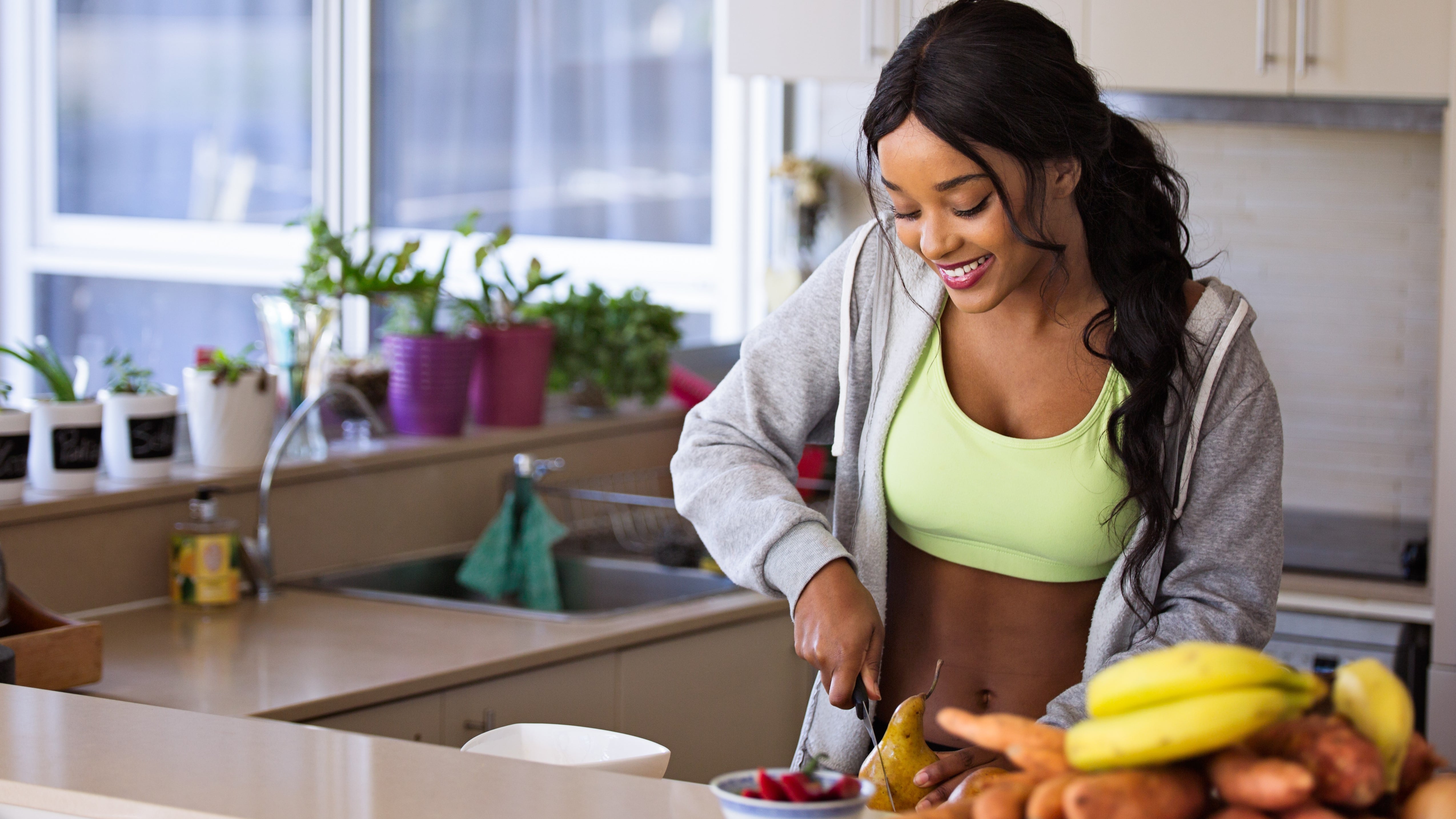
Woman cutting fruits in the kitchen.

The COVID-19 pandemic has posed challenges to everyone around the globe. From physical to mental up to emotional aspects of an individual is greatly affected by this pandemic.

Maintaining good health is very important. Here are some strategies for keeping yourself physically and mentally healthy in quarantine so you can keep fighting the good fight.

1. Don’t overindulge in unhealthy eating habits. Wine, candy, chips, soda. All are fine in moderation. When humans are under stress (including isolation) we go into self-soothing strategies. Self-soothing strategies are ways that we calm ourselves down when under stress. Many of us self-soothe with alcohol or junk food. Though alcohol or junk food may help your mental health in the short term, it will affect your physical health, and therefore your body’s resistance to infection. Limit drinking and consumption of sugary or processed foods.

2. Schedule time for healthy self-soothing. When working from home it can be hard to see the lines between work and downtime (in both directions). Make sure work time is used for work and downtime is kept sacred. Downtime is essential for self-soothing. Epsom salt baths, listening to music, doing yoga, exercise, and meditation are all healthy self-soothing options.

3. Relieving stress in healthy ways is key to ensuring your stress does not exceed your body’s ability to recover from it. This will allow stressors on your body to remain in the hormetic zone (the amount of stress that’s healthy rather than harmful).

4. Manage your environment. Designate an area to work if feasible. Play certain music only when you’re working, or wear “work clothes” while you’re doing work and change clothes when you are transitioning to downtime. You can change your environment with lighting, music, and clothing. Change your state by changing your surroundings. Be deliberate about creating a “working environment” and a “downtime environment.”

5. Maintain your sleep routine. Whether a healthcare worker or a 9-5er who suddenly has very little structure, sleep is going to be essential in keeping you healthy in the face of COVID-19. Make sure you’re practicing good sleep hygiene, keeping your sleeping environment cool, dark, and quiet. Limit blue spectrum light before bed with special glasses or programs like Nightshift on Macs, iPhones, and iPads, and f.lux on PCs and smartphones.

6. Get sun. Vitamin D is important in the immune response. Getting sun will increase your vitamin D reserves. Opening shades and windows, sitting in sunny areas of your apartment, and even getting outside when social distancing is possible (maintaining 6+ feet between yourself and others).

7. Get exercise. Even if it’s raining or too crowded outside to practice social distancing, an exercise in your apartment. Wall push-ups, squats, guard circles, Supermans, and etc. are effective exercises with limited space. Switch between upper and lower body exercises to get your heart pumping and add a cardio component.

8. Enjoy your in-home “hydrotherapy machine.” Use your shower or bath for the therapeutic and toxin-flushing impact it can have. Hot showers/baths ease muscle tension relieving stress.

9. Reach out for emotional support. Schedule virtual happy hours, brunches, and hangouts with friends.


Stay healthy out there. Not only for yourself, but for your neighbors and loved ones.

Don’t forget to share this!

How to Make the Most Out of Quarantine

in health

Due to the spread of the pandemic globally, everybody is being asked to stay home. With that, you might find yourself with a sense of unease now that your usual routine is out the window.

We, humans, are social beings and isolation can be tough especially when you are living alone or the other way around if you are a very outgoing person.

It might be that we took advantage of the first few months by just watching our favorite series, oversleeping, or simply doing nothing. However, think outside the box, we don’t know when this will end so we might as well attempt to make the best of our time at home and do more of what we can control.

We usually feel our best when we are productive and working towards something. Being home all day and only focusing on news and a virus will negatively affect our mental health. Not saying that we must not be informed about what’s happening but we must not obsess about it!

Here are a few tips on how we can make the best out of quarantine days.


Establish a Routine

Creating a daily routine is essential for the success of everyday tasks. Identify blocks of time for different tasks and activities. Following a fixed daily schedule allows an individual to build productivity habits over time. 

Learn More How to Establish a Daily Routine to Become Your Best Self


Create

While in quarantine we have all the time to create things. From arts and crafts that we can enjoy. 

Writing is another way that we can do while at home. Writing is also therapeutic. It can be a way to express your feelings and emotions. Some also write poems, stories, fiction, and more. 

Checkout these Pandemic-related Writing Projects


Declutter

Now is the perfect time to declutter things. While we might want to do this before, we do not have the luxury of time, but now, the time is all yours. We can start from the kitchen shelves, closets, phone gallery, inbox, and others.

We might also consider donating these decluttered pieces of stuff to those who need it the most. Simple acts of kindness matter during this crisis.


Learn Something

Nurturing our minds by acquiring new knowledge and skills is another worthwhile activity we can do this quarantine. 

We can learn something new from reading books, taking online courses, go on youtube, and start interesting discussions.


Offer Help

COVID-19 has affected almost all aspects of our lives. From employment, businesses, education, entertainment, and more. 

In this trying of times, offering help is really a need. We can offer help by creating support groups, donating, creating valuable content, helping out around the house, and more.


Go Inwards

Having the luxury of time means more time for ourselves. During normal days before the pandemic happened, we are very busy with our work and other commitments, now is the perfect time for ourselves.

We can start reflecting on our progress for the past few months.

Assessing where we are now is another intrapersonal activity that we can do.

Start visualizing your goals and your future plans.


Some of us might think that being on quarantine is not that productive. Some of us might be lurking in fear, anxiety, and depression. But if we try to look on the brighter side, being in quarantine allows us to do things we can’t do before. We can make the most of our quarantine with these activities.

We do not know what the future holds but we can do something today that our future self will be thankful for.


Don’t forget to share!

5 Working from Home Tips

in health

As coronavirus cases surged globally, so have the number of companies asking their employees to work from home. To mitigate the situation, many companies allowed their employees to work from home, some also implemented a rotating schedule for on-site work or teams working in shifts.

Working from home may not be that so easy for some. Adjustments from office work to working from home might be difficult for others too. With that, allow us to share some tips you can do while working from home to increase your productivity and to adjust easily to your new work environment. Here are the tips:

  1. Create your space & stay organized

Set a place at home as your workspace. Put your things together in a way to make it easier to access. You can customize your workspace to have a feel of an office depending on what type you are comfortable with.

Having your own workspace lessens distractions while you work. This also improves your productivity even working from home.

Learn more about how to create a workspace that improves productivity

2. Know your tools

Get a list of the work from home tools and resources you need and familiarise yourself before starting.

Working from home comes with a unique set of challenges too, and that means you’ll need to have a unique set of tools to tackle them.

Today, whether you and your team are working from home you are expected to perform at the same level of work no matter where you’re working from.

3. Record videos

Recording videos are useful for reference or review. If you are an employer or a team leader, you can record videos to show instructions or tasks to be done for your team or employees. This will facilitate tasks and instructions. 

Use free audio and video recording tools available online.

4. Be flexible

Things can change really fast and you may need to adjust. Be open to the possibilities.

While working from home, you may also face some challenges in terms of your schedule, communication with your team, tools, and resources, and more. Learn to be flexible in every situation. Have a solution-mindset.

5. Stay in touch

Have a community of fellow employees and touch base often to share tips and have support.

Communication and connection are very essential during this time. Stay in touch.


Working from home might not be easy for some. Think of ways and do these tips in order to boost your productivity and to still have a feel of your office. Remember when working from home, we help stop the spread.


Don’t forget to share this post!


Learn more about working from home during the pandemic

4 Ways to Manage COVID-19 Stress

in health

Globally, COVID-19 is causing people to feel afraid, anxious, distressed, and worried. From children to adults, people from various walks of life experience these feelings. The thought of getting the virus anytime from anyone hunts people’s mind from time to time. When these feelings keep on thriving in us, stress arises. With the current situation that we have, it is very important to know how to manage COVID-19 stress in order to maintain our well-being and state of mind. 

In this post, we will provide tips on how to manage COVID-19 Stress. These are some tips that you can do to look after yourself:

  1. Take a Break from the News

While it’s true that it is important to watch the news in order for us to be aware of the things happening around us, however listening to news sometimes causes feelings of uncertainty especially if what we listen often are more of the negatives. 

Information overload can be upsetting. Make an effort to switch off your screens once in a while.

2. Take care of your body

Stress greatly affects one’s body. The International Committee of the Red Cross is concerned that this global pandemic may increase this stress exponentially. 

It is important to be healthy during these times in order to combat the fearful effects of stress on us. Stress can affect all aspects of our being not just physically but also mentally and emotionally. 

To take care of your body, meditate, eat well-balanced meals, take deep breaths. Aside from staying safe, stay healthy.

Learn more about mental health and psychosocial considerations during the COVID-19 outbreak

3. Make time to unwind

Divert your attention to worthwhile activities. This way, your wind can stop thinking about the virus. You can develop new hobbies and skills too. 

Use a few minutes of your day to do something you enjoy. Either it is an activity that makes you relaxed or productive. 

Learn more about productive things to do while at home or in quarantine

4. Connect with others

It’s normal to feel sad, stressed, confused, scared, or angry during these troubled times. Talking to people you trust can help. Expressing what you feel and how you feel lightens the burden inside of you. It makes you feel lighter hen you communicate with others.

Learn more about why relational connection is so important during the pandemic


Our current situation may be overwhelming, but coping with stress will make you, the people you care about, and your community stronger.


Don’t forget to share this post!

5 Ways to Stay Safe After Quarantine

in health

How many times have you asked yourself “What will I do after this quarantine?” or “What will be the changes that will happen if the lockdown measures are lifted?”

The fight against COVID-19 is not yet over. Some places around the world where cases of the pandemic are slowly going down are doing efforts in order to change their lockdown measures. Restaurants, pubs, offices are starting to reopen. People start to go out of their homes after months of isolation. At the end of the day, it’s important that we do something to protect ourselves from the enemy that cannot be seen. Here are some ways in order to stay safe after quarantine:

  1. Do not neglect basic health protocols

Due to this pandemic, several health protocols were mandated for the public to follow. These includes:

  • wearing of masks
  • physical distancing
  • hand washing frequently
  • avoid crowded places
  • sanitize often

Learn more about how to protect yourself and others from the spread COVID-19

       2. Follow the guidelines from the authorities

It’s true that there will be changes to lockdown measures but let us be reminded that guidelines from authorities still apply. Strict compliance should be carried out at all times to stop the spread. Stay up to date with the recommendations from the World Health Organization (WHO) and UK Government Guidelines

3. Manage to have work from home schedule

As lockdown measures are being in relaxed in low-risk areas, offices will soon open and that means employees will start getting back to work. The threat of the virus is still around us, with that many employees are hoping to work from home even after the pandemic is over

Having an arrangement with your employer is important. You can agree to a rotating schedule for on-site work or teams working in shifts.

4. Avoid confined spaces

As much as possible avoid confined spaces, especially where air can be trapped or is unfiltered. Although many places have restricted gathering in public parks, take advantage of any outdoor or open-air areas which can allow people to meet while facilitating social distancing.

5. Practice eating alone

Eating together has been a practice for many. It gives time to mingle, relax, socialize, and more. But this time, let us learn to set aside these joyous moments during eating time. Whenever the time to eat comes around, learn to distance yourself, and have your own personal space. Eating means you let your guard down by removing masks and gloves, and relaxing social distancing. To protect yourself, eating alone can be of help.

As we slowly get back to normal, the greater is our responsibility to protect ourselves to help stop the spread. We can practice these simple ways to stay safe for ourselves and for our loved ones. We are fighting an enemy that cannot be seen with that precaution is our best weapon. 

Soap is a highly efficient way of killing the virus when it’s on your skin

in health

According to the guardian.com using old fashion soap is the best way to kill most virus.

Alcohol-based disinfectants are also effective, but soap is a highly efficient way of killing the virus when it’s on your skin
Man and young child washing hands with soap
 ‘Soap dissolves the fat membrane of the virus – and the virus falls apart like a house of cards and dies.’ Photograph: Flashpop/Getty Images


By Pall Thordarson who is a Professor in Chemistry at the University of New South Wales, Sydney

Viruses can be active outside the body for hours, even days. Disinfectants, liquids, wipes, gels and creams containing alcohol are all useful at getting rid of them – but they are not quite as good as normal soap.


When I shared the information above using Twitter, it went viral. I think I have worked out why. Health authorities have been giving us two messages: once you have the virus there are no drugs that can kill it or help you get rid of it. But also, wash your hands to stop the virus spreading. This seems odd. You can’t, even for a million dollars, get a drug for the coronavirus – but your grandmother’s bar of soap kills the virus.

So why does soap work so well on the Sars-CoV-2, the coronavirus and indeed most viruses? The short story: because the virus is a self-assembled nanoparticle in which the weakest link is the lipid (fatty) bilayer. Soap dissolves the fat membrane and the virus falls apart like a house of cards and dies – or rather, we should say it becomes inactive as viruses aren’t really alive.

The slightly longer story is that most viruses consist of three key building blocks: ribonucleic acid (RNA), proteins and lipids. A virus-infected cell makes lots of these building blocks, which then spontaneously self-assemble to form the virus. Critically, there are no strong covalent bonds holding these units together, which means you do not necessarily need harsh chemicals to split those units apart. When an infected cell dies, all these new viruses escape and go on to infect other cells. Some end up also in the airways of lungs.

When you cough, or especially when you sneeze, tiny droplets from the airways can fly up to 10 metres. The larger ones are thought to be the main coronavirus carriers and they can go at least two metres.

These tiny droplets end on surfaces and often dry out quickly. But the viruses remain active. Human skin is an ideal surface for a virus. It is “organic” and the proteins and fatty acids in the dead cells on the surface interact with the virus.

When you touch, say, a steel surface with a virus particle on it, it will stick to your skin and hence get transferred on to your hands. If you then touch your face, especially your eyes, nostrils or mouth, you can get infected. And it turns out that most people touch their face once every two to five minutes.

Washing the virus off with water alone might work. But water is not good at competing with the strong, glue-like interactions between the skin and the virus. Water isn’t enough.

Soapy water is totally different. Soap contains fat-like substances known as amphiphiles, some of which are structurally very similar to the lipids in the virus membrane. The soap molecules “compete” with the lipids in the virus membrane. This is more or less how soap also removes normal dirt from the skin.

The soap not only loosens the “glue” between the virus and the skin but also the Velcro-like interactions that hold the proteins, lipids and RNA in the virus together.


Alcohol-based products, which pretty much includes all “disinfectant” products, contain a high-percentage alcohol solution (typically 60-80% ethanol) and kill viruses in a similar fashion. But soap is better because you only need a fairly small amount of soapy water, which, with rubbing, covers your entire hand easily. Whereas you need to literally soak the virus in ethanol for a brief moment, and wipes or rubbing a gel on the hands does not guarantee that you soak every corner of the skin on your hands effectively enough.

So, soap is the best, but do please use alcohol-based sanitiser when soap is not handy or practical.

 Pall Thordarson is a professor of chemistry at the University of New South Wales, Sydney

This content was not writing by us but by guardian.com

Go to Top