Category archive

Housing

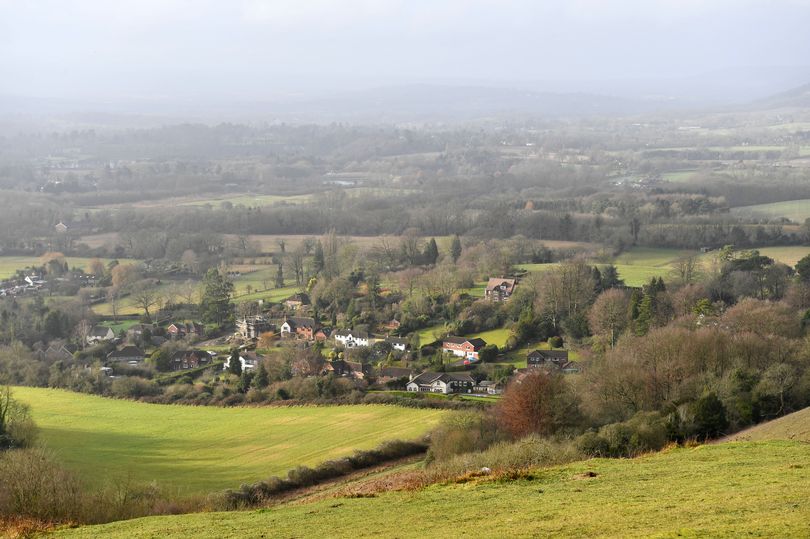
15 commuter towns Londoners are moving to, according to an estate agent
in Housing

After five months of lockdown, with millions of Londoners working from home rather than going to their offices every day, we have reached the “new normal”.

And many have taken this opportunity to question whether they need to live in London at all? With high rents resulting in a lower quality of life and making it even more difficult to save for a deposit, even the houses the average Londoner can buy are smaller and less luxurious than those they can afford outside the capital.

Estate agency Hamptons International’s summer 2020 market report has revealed this “resurgence of the suburbs” is due to two major factors. Some Londoners are after large homes with gardens having seen their importance during the lockdown and homes in the suburbs offer better value than those in the city.

According to the report, 34 percent people registering interest to buy in the suburbs around London currently live in the capital, the highest peak of interest in the suburbs since 2016.

What exactly counts as a suburb of London is hard to define. Each borough has its own “town centre” style area and several boroughs together make up Central London and Inner London.

Even boroughs at the edges of the city, like Hounslow or Croydon feature urban areas where rents and house prices are higher due to public transport connections.

However there are places around the city’s edge which are growing increasingly popular with people looking to leave London but still be able to travel to work a few days a week.

The report said: “A greater willingness to contemplate a move to the country may be one of the longer-lasting consequences of lockdown.

“Working from home – which was supposed to be a temporary arrangement – seems set to become a way of life for more employees at every level in organisations. The length of the commute to London has always been a prime consideration in the choice of a home to buy or rent.

“But househunters are becoming more focused on such features as garden size and space for a home office. A kitchen table tends not to be a long-term substitute for a desk.”

It added: “Most people hoping to leave the city want to move to a location in the South.

“Close to one-in-five (19 per cent) applicants who registered in a Southern branch in April 2020 were Londoners. This was up from 12 per cent in April 2019 and above the last peak of 13 per cent in April 2016.

“Londoners made up seven percent of those registering in branches in the Midlands, but there was a small annual fall in the share of London applicants registering to buy in the North.

“The yearning to relocate to the Lake District may be strong, but, in practice, many workers suspect they will have to be in their central London office for one or two days a week, as lockdown eases.”

So which destinations around London are the most popular with tourists and how far are they from the geographical centre of London, defined as being just off Trafalgar Square?

15. Brentwood, Essex – 20 miles

14. Mole Valley, Surrey – 16 miles

13. Gravesham, Kent – 22 miles

12. Luton, Bedfordshire – 29 miles

11. Elmbridge, Surrey – 23 miles

10. Medway, Kent – 28 miles

9. Aylesbury Vale – 37 miles

8. Watford, Hertfordshire – 16 miles

7. Reigate & Banstead, Surrey – 16 miles

6. Sevenoaks, Kent – 21 miles

5. Thurrock, Essex – 18 miles

4. Tandridge, Surrey – 19 miles

3. Dartford, Kent – 15 miles

2. Epping Forest, Essex – 17 miles

1. Broxbourne, Hertfordshire – 18 miles

Have you decided to move out of London and buy a place in the suburbs? Tell your story by emailing qasim.peracha@reachplc.com

All content belongs to mylondon.news

We do not claim any content to be our own.
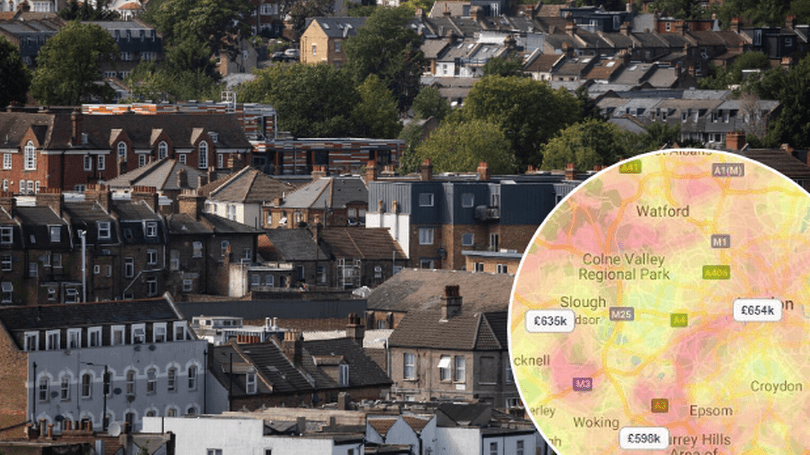
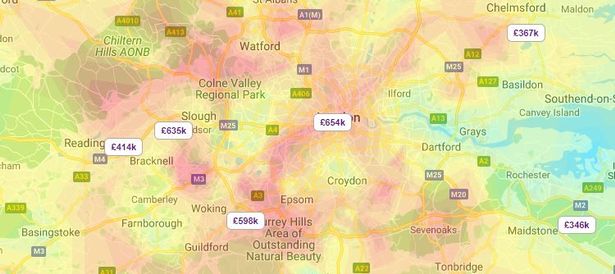
London house prices: Zoopla’s property heatmap that shows you where London’s most expensive areas are

in Housing

In London, the traditional wisdom on house prices is that they are much higher than the rest of the country.

And that holds true, but the other half of that statement would be that to save money or to get more bang for your buck you should move further out of the city.

Often cited using the zones on the Tube map, estate agents may tell you to focus on zones 5 and 6 rather than the Zone 2 station you would much rather commute from.

But property listings website Zoopla has uncovered that things may not be so simple.

By developing a heatmap which shows how house prices vary across the capital, an interesting pattern emerges.

While Central London is indeed an expensive place to look to buy a home, perhaps now the preserve of investors, oligarchs and multi-millionaires, other areas of London are also red-hot when it comes to property prices.

Looking at the map from above, you can clearly make out an X pattern, with the centre of the X at the centre of London.

In diagonal directions to the North East, South East, South West and North West, there are corridors of high property prices.

In the North East, clusters of high-value homes appear around Stratford’s desirable East Village area, Wanstead, Snaresbrook and Woodford before heading into the celeb-favoured areas of Essex like Buckhurst Hill and Chigwell, which are still an easy commute from London on the London Underground’s Central line.

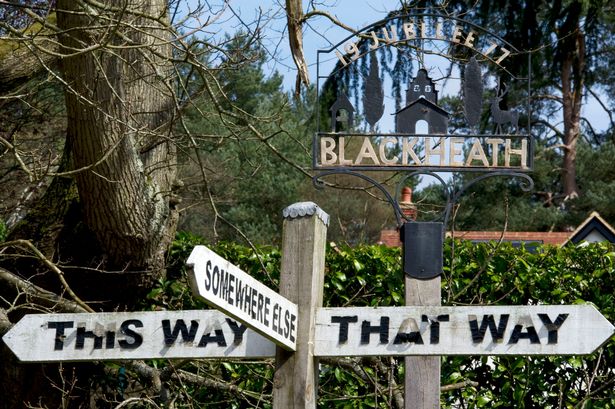
Heading to the South Eastern corner, Blackheath in Greenwich, areas of Beckenham, Chislehurst and Bexley and the suburb of Locksbottom in Bromley in particular light the map up in red.

In the South West the ever-desirable areas of Barnes, Roehampton, Richmond, Wimbledon, areas of Kingston and then parts of Surrey like Esher, Oxshott and Weybridge, all easily commutable y train to London, formed a high-value property corridor.

Last but not least, the North Western leg of the X-shape starts in Kensington and radiates out through Marylebone and St John’s Wood to Hampstead, Southgate, Totteridge and Arkley in Barnet as well as through Stanmore, Pinner and Northwood.

The map calculates the “Zed-Index” of properties, average house prices created by Zoopla using their statistics and data on a range of factors.

The heat-map’s spectrum is from blue, which are the areas with lowest property values, to red, areas with the highest values.

London’s only significant section of blue housing or low property prices is now a channel radiating eastwards from around Barking along both sides of the River Thames, out into Essex areas like Grays and Gravesend.

You can explore Zoopla’s property price heatmap here.


All content belongs to MyLondon

We do not claim any content to be our own.
Homeowners in England free to build bigger extensions

in Housing

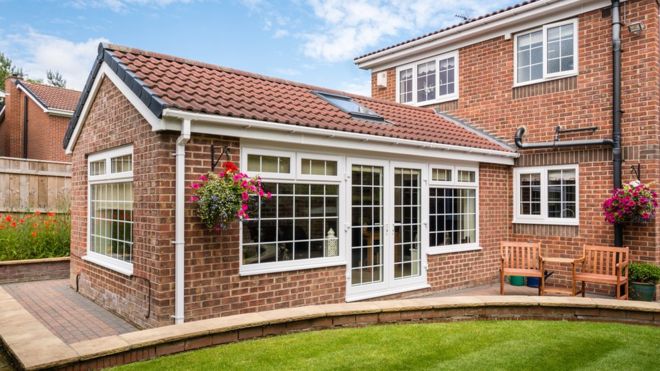
Homeowners in England are being given the green light to build larger extensions without planning permission.

Temporary rules, which allowed bigger single-storey rear extensions without a full planning application, are being made permanent.

Additions to terraced and semi-detached homes can be up to 6m, while detached houses will be able to add even larger structures, up to 8m long.

Neighbours will still be consulted and can raise objections to extensions.

Since 2013, 110,000 people have taken advantage of the temporary rules, which doubled the previous limits of extensions that didn’t require planning permission from the local authority.

Instead of waiting possibly months for approval, homeowners notify the council of the building work beforehand, and council officials inform the neighbours.

If they raise concerns, the council decides if the extension is likely to harm the character or enjoyment of the area, and may block the plans.

In Scotland, Wales and Northern Ireland, rear extensions more than 3m or 4m long will continue to require a full planning application, which places the design and impact of the building under more scrutiny.

Housing minister Kit Malthouse said the change in England means “families can grow without being forced to move”.

He said: “These measures will help families extend their properties without battling through time-consuming red tape.”

Impact on neighbours

But Martin Tett, planning spokesman for the Local Government Association, which represents UK local councils, said: “The planning process exists for a reason.”

He acknowledged the relaxed rules were popular with homeowners, but said it meant councils had little opportunity to consider the impact of extensions on their local area.

“We do not believe this right should be made permanent until an independent review is carried out of its impact, both on neighbouring residents and businesses, and also the capacity of local planning departments,” he said.

The Ministry for Housing, Communities and Local Government said it was also removing other planning rules to allow business owners to respond to changes in England’s high streets.

It means shops can be converted into office space without a full planning application being made.

Shops, offices and betting shops will also be able to temporarily change to community uses such as libraries or public halls.


Source from bbc.co.uk

Go to Top