Category archive

politics

The full list of essential businesses allowed to stay open
in politics

What shops are staying open and why do they need to close? Read our guide to find out.

Prime Minister Boris Johnson has ordered a month-long lockdown from November 5 after being told the NHS was on course to become overwhelmed within five weeks amid a national resurgence of Covid-19.

People in England are, once again, being asked to “stay at home”, with members of the public only allowed to leave their homes for a series of specified reasons, including ‘essential’ shopping.

Here’s our guide to which shops are staying open and which are being locked down.

What essential shops are open?

Food shops, supermarkets, garden centres and certain other retailers providing essential goods and services can remain open.

Essential retail should follow Covid-secure guidelines to protect customers, visitors and workers.

Non-essential retail can remain open for delivery to customers and click-and-collect.

Grocery stores will remain open and, unlike Wales, none of their aisles selling non-essential goods will be closed off.

Hardware stores and garden centres are expected to be allowed to remain open, as long as they can operate in a Covid-secure way.

What shops will be forced to close?

To reduce social contact, the Government has ordered certain businesses and venues to close.

All non-essential retailers will have to close from Thursday, meaning many shops will be closed during one of their most profitable months of the year.

These include all non-essential retail including – but not limited to – clothing and electronics stores, vehicle showrooms, travel agents, betting shops, auction houses, tailors, car washes, tobacco and vape shops.​

Non-essential retailers will still be allowed to offer click and collect services if they can be Covid-secure, as well as being able to trade online.

Are takeaways open?

Hospitality venues like restaurants, bars and pubs must close, but can still provide takeaway and delivery services. However, takeaway of alcohol will not be allowed.

Why do shops have to close?

As with pubs, restaurants and other places of social activity, the Government wants to stop any chance the virus has of spreading  between people, particularly people in groups.

Shops can help the virus to spread because it can live on surfaces for some time – so the items you pick up in the shop could be carrying the virus; you could then become infected yourself or pass it on to someone else. Scientists say that closing shops greatly reduces the risk of spreading the virus.

If fewer people get infected, there will be less strain on the NHS and more lives can be saved.

Will bike shops stay open?

As seen in the previous lockdown, bike stores will be given the green light to remain open. As all gyms and fitness centres will close their doors this Thursday, November 5th, bikes are one of the only ways people can exercise, which makes bike stores among the list of ‘essential stores’.

Will car showrooms & dealerships stay open?

Car showrooms will close their doors under the new lockdown measures and will remain closed until December 2nd, at least. However, the Government has announced that purchased cars will still be delivered to the customer’s house, while, alternatively, customers who confirmed the purchase of a car prior to lockdown will have the option to collect their vehicle from the dealership, in a system which mirrors ‘click and collect’.

Will hardware shops stay open?

The Government is yet to give the go-ahead for hardware stores to remain open throughout the upcoming lockdown, however, if the measures resemble the previous lockdown, several of these stores, including B&Q and Homebase will be able to continue to trade, as long as there are strict social distancing measures in place. Other hardware stores, including Wickes and Screwfix, operated a click and collect service; however, it is yet to be confirmed whether they will remain open for trade throughout November.

Will the Post Office remain open?

The Government has not explicitly mentioned whether the Post Office will close; however, the shop is classed as ‘essential’ and, therefore, is likely to continue to open throughout the second lockdown. This prediction comes from the measures seen in the first lockdown, when all Post Offices continued to trade, while the Royal Mail continued their postal delivery service.

Will libraries stay open?

There is no confirmation as to whether libraries will be forced to close their doors this Thursday, November 5th, as the government has not yet confirmed if libraries are deemed as an ‘essential service’. It is important to remember that schools, universities and colleges will remain open throughout November; however, the answer is likely to depend on whether libraries are able to maintain successful social distancing measures.

Will Argos close?

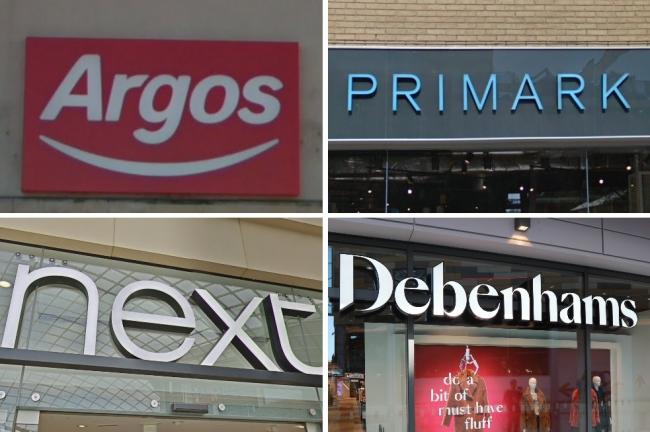
Yes, all Argos stores across England will close their doors throughout the entirety of the second national lockdown, and will only reopen when the country enters its ‘exit strategy’ on December 2nd. The closures include Argos inside Sainsbury’s supermarkets; however, the store is still offering delivery when you order online throughout November.

Oxfam Store before England enters lockdown on Thursday, 5th November
The front of an Oxfam store near Durham, as non-essential shops prepare to close their doors once again CREDIT: Tom Wilkinson/PA

Can I still go to the dentist?

Unlike the previous lockdown, dentists will remain open and will continue to welcome patients for routine appointments. This move comes after the Prime Minister encouraged people not to neglect their NHS appointments, despite the severe new lockdown measures.

Can I still visit a garden centre?

Yes, garden centres will remain open throughout the latest lockdown, as they are among the essential stores, to sell goods which the public will need to access throughout November. However, it is vital these centres follow the appropriate social distancing measures in order to keep shoppers safe throughout the new lockdown.

Will estate agents close?

The housing secretary, Robert Jenrick, suggested that the housing market will remain in business throughout the second lockdown, in a statement which contrasts the rules of the first lockdown in March. However, there has been no word on whether estate agents will be physically forced to close their doors over the coming month, as all ‘non- essential retail’ will pause until December 2nd.

 Will golf courses stay open?

The Government is yet to confirm whether golf courses will receive a green light to remain open over the lockdown; however, the confirmation is likely to come in the following day. There is, however, a suggestion that courses may remain open as they offer the opportunity to exercise and are easy to implement social distancing measures.

All content belongs to https://www.telegraph.co.uk/news/0/non-essential-shops-closing-full-list-essential-businesses-allowed/

We do not claim any content to be our own.
20,000 people in Croydon want to see their council leader replaced – here’s why

in Croydon/politics

A campaign group is calling for a referendum on whether the borough should have a democratically elected mayor

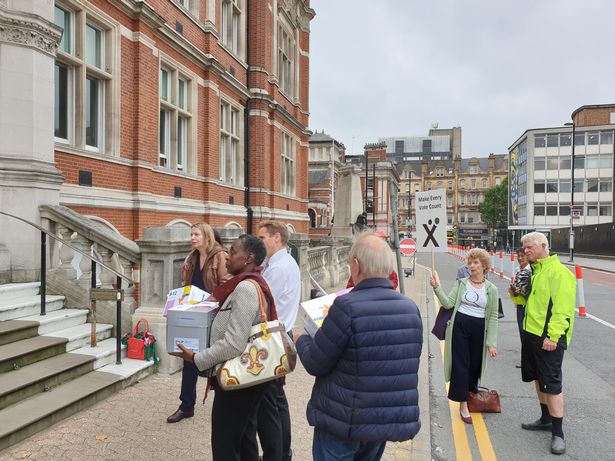
More than 20,000 people have signed a petition calling for Croydon’s council leader to be replaced by a directly elected mayor who would be chosen by the town’s voters.

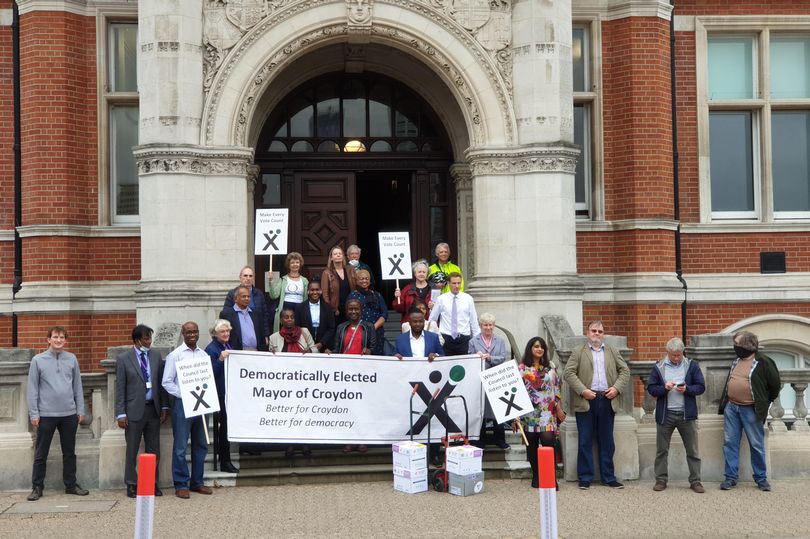
The campaign for a democratically elected mayor of Croydon (DEMOC) was officially launched in February this year, and campaigners handed a petition to Croydon Council yesterday (Thursday, September 3).

They now want to see a referendum take place on May 6 next year – the same day the London Mayor and Assembly elections are due to be held.

DEMOC wants to see the council leader position, currently held by Councillor Tony Newman, replaced by a directly elected mayor who would be chosen by Croydon’s voters.

The group was started by a mix of residents’ associations and is supported by representatives from Labour and Conservative parties.

The group claims that one half of the borough is always ignored by the political leadership of the council as the voters in the north traditionally support Labour while voters in the south support Conservative.

In London, Hackney, Tower Hamlets and Watford all have democratically elected mayors.

Croydon Council does have a mayor who wears red robes and a chain, but this is a ceremonial position.

Under the new system, the ceremonial mayor would be renamed the chairperson of the council and would undertake the same responsibilities as currently.

Members of the DEMOC group arrive at Croydon Town Hall to deliver a petition of more than 20,000 signatures.

Gerry Meredith-Smith, chair of the DEMOC campaign said: “There is a desire for change in our borough and a lot of momentum behind the idea of a referendum for a directly elected mayor.”

He asked whether the council would use the excuse of Covid-19 to “ignore a large number of people”.

One of the issues the group highlights is claims that planning permission is given out too easily under the current system.

While vice chair and member South Croydon Labour Party, Joanne Milligan, said the campaign is what is best for democracy regardless of which political party is in charge.

She added: “We want to change the system so that whichever political party the mayor comes from, they have to listen to people right across the borough from Norbury to Coulsdon and New Addington to Waddon.”

Now it is up to Croydon Council’s lawyers and electoral services to decide when a referendum can take place – the earliest date for this would be May 6.

But council leader Tony Newman said he did not think it would be the best route for the borough.

He said: “From a council perspective we are very much focused on the cross park governance review.

“My personal objection to the petition is we are the largest London borough with 70 councillors, it doesn’t seem the best to put total power into the hands of one individual.

“The petition has overwhelmingly been around the building of homes, at the last minute they included the pressures on the council’s finances – to use that is frankly shameful.

“My understanding is that the earliest it could possibly be considered is May, I would be very happy for it to happen then, we are confident that we would win the referendum.”

The campaign is also backed by Conservative MP for Croydon South, Chris Philp, who said it would ‘dramatically increase the accountability of those who run our town’.

The council now has one month to assess the validity of the petition before responding to the organiser.

After this a public notice will be published of the council’s decision.

All content belongs to mylondon.news

We do not claim any content to be our own.
European parliament says it will not use facial recognition tech

in politics

The guardian reports

The European parliament has insisted it has no plans to introduce facial recognition technology after a leaked internal memo discussing its use in security provoked an outcry.

A page on the European parliament’s intranet, seen by the Guardian, suggested that facial recognition could be used “in the context of biometric-based security and services to members [MEPs]”.


Titled “artificial intelligence for better services”, the page discussed how such technologies, including facial recognition and AI-assisted translation, would have “consequences on working methods, processes, staff profiles and the contracting of services”.


The page on the parliament’s 2019-21 “digital transformation programme” was removed on Wednesday after a prominent MEP and staff unions questioned the potential use of facial recognition in the parliament. A spokesperson for the parliament said: “There is no project of facial recognition in the European parliament,” adding that it was “not foreseen at any level”.


The incident is an embarrassment for the parliament, coming shortly before the EU executive is expected to announce a temporary ban on the use of facial recognition technology in public places.

The European commission is expected to announce the ban this month, covering the use of the technology in stations, stadiums and shopping centres and lasting three to five years, to allow regulators time to assess the impact of the fast-developing technology.

The Dutch Liberal MEP Sophia in ’t Veld, who sits on the European parliament’s civil liberties committee, wrote to the parliament’s top official, Klaus Welle, to question how members and their assistants could “benefit” from “biometric-based security and services”, picking up wording used on the parliament’s intranet site.

She also sought information on costs, impact studies and whether such plans would be in line with the EU’s data protection regulations. An internal staff union voiced a complaint in an email sent to all 705 MEPs and many of the parliament’s 7,500 officials. “Ms In ’t Veld, we share your concerns about face recognition in parliament,” said the email from the SGPOE union, which is currently taking part in an internal election. “Why not put staff recognition before face recognition?”

The page was removed shortly after the complaints emerged. A spokesperson said the complaint referred to “an old and outdated draft version” of “an exploratory project” that had been “misplaced on the intranet of the EP”.

“One exploratory project of the EP administration is to study and understand the potentials and threats of AI applied to parliamentary and administrative activities of the institution,” the spokesperson said. “This old draft mentioned facial recognition as a possible field of study, nothing more.

“Data protection is and remains a clear priority of the European parliament and its administration.”

Content written by Theguardian

Go to Top