Author

Jay Foster - page 2

Jay Foster has 123 articles published.

Palace Women secure point in first home game of the season
in football

An unusual 19:00 Saturday kick-off in Bromley saw the Eagles and the London City Lionesses play out an eventful 1-1 draw in the sides’ second games of the season.

In summary:

  • Crystal Palace kick-started their first home game of the season in strong fashion, with Lizzie Waldie scoring inside the first few minutes. 1-0.
  • Lionesses’ Elizabeta Ejupi levels the score. 1-1.
  • HT: 1-1
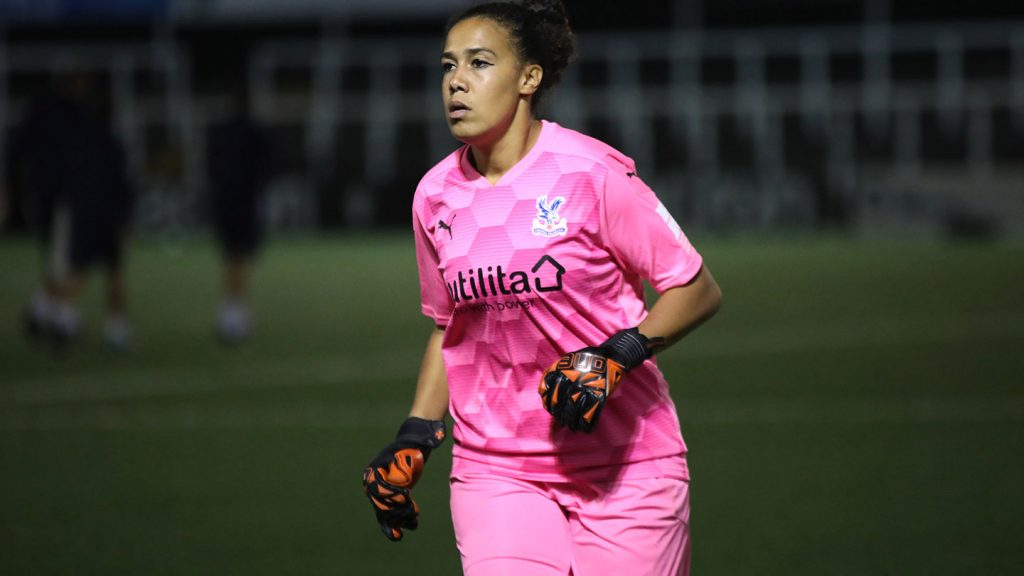
  • Palace shot stopper Chloe Morgan keeps the game level with a string of excellent saves.
  • FT: 1-1

Siobhan Wilson, off the back of a fine assist in the season-opener, was looking to score herself this time out with an effort in the first couple of minutes, which highlighted the impetus in which manager Dean Davenport had sent out his charges.

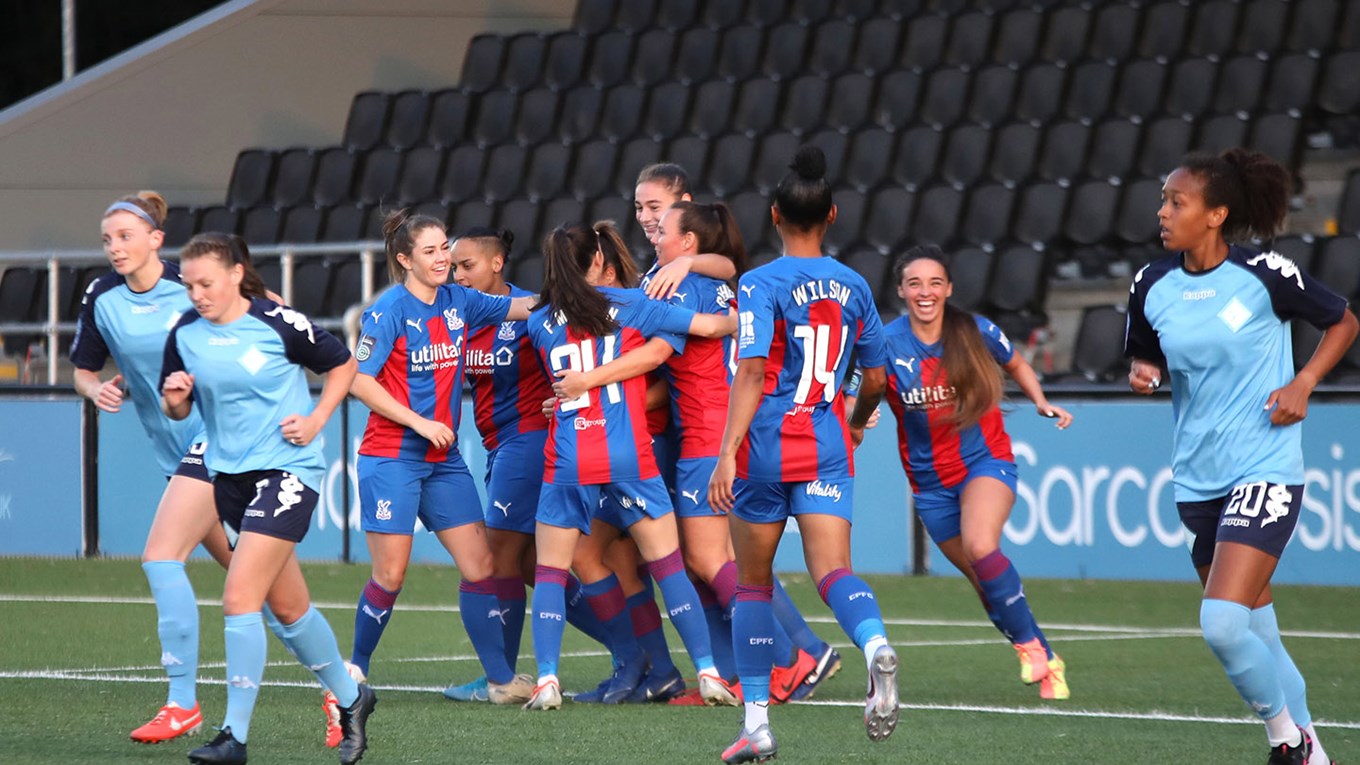
A warning from Wilson to the opposing team, but one they did not heed, with Lizzie Waldie heading home her first goal for the club on four minutes.

The visitors did respond, though, and instantly hit the Eagles’ crossbar with a great effort. And this was the beginning of a defensive spell for the Eagles with first Wilson blocking the closing-in Lioness, before Chloe Morgan saved well from a further follow-up.

Morgan was again called into action, this time Elizabeta Ejupi’s curled attempt brought about a magnificent save from Palace’s summer signing.

It looked like Davenport’s side would get to the halfway stage leading, thanks to their defensive ranks, with Annabel Johnson leading by example with several crucial clearances. However, Ejupi did eventually find a way through the Palace rearguard to level proceedings.
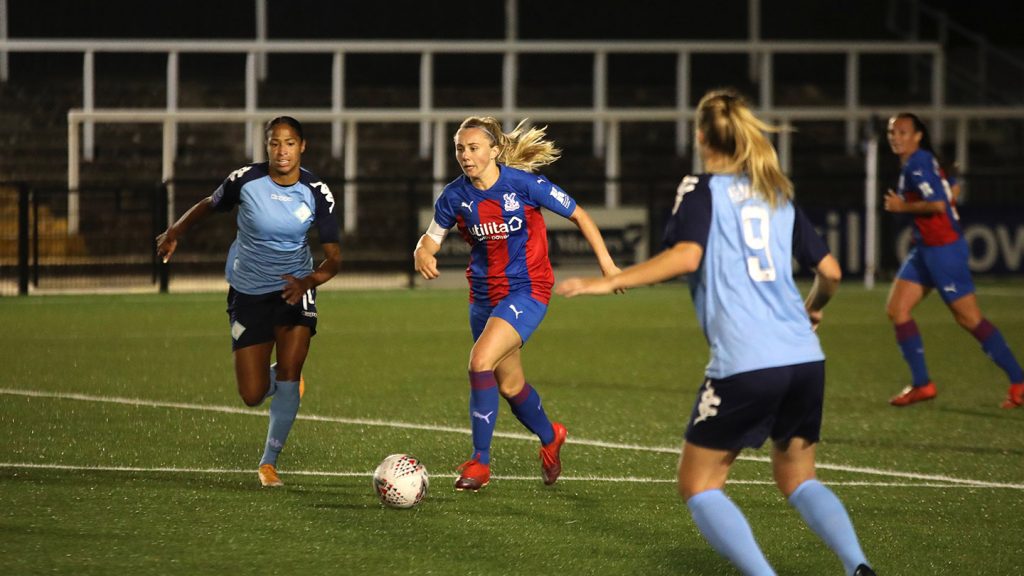
The second-half carried on much in the same vein, the Lionesses’ Atlanta Primus was expertly thwarted by Morgan who then continued her excellent spell to block Alli Murphy’s attempt to put the Lionesses in the lead.

A Lionesses corner handed the Eagles their best chance of the second-half, with a poorly executed set-piece resulting in a Palace breakaway with purpose, with the move curtailed due to a foul. From the resulting free-kick from Coral-Jade Haines’ effort was saved well by Shae Yanez.
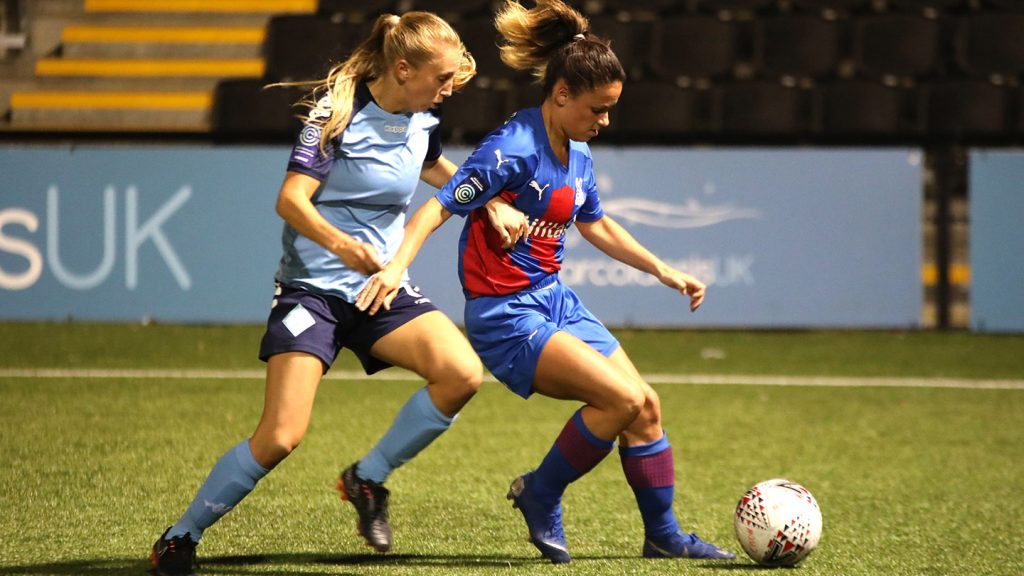
A late lone charge from last week’s goalscorer, Cherelle Khassal, raised hopes of Palace’s first win of the season late on. However, a draw under the lights at Hayes Lane was a fair result and Davenport’s side remain unbeaten ahead of Blackburn Rovers in two weeks’ time.

Palace: Chloe Morgan, Johnson, Rutherford, Waldie, Ffion Morgan, Nicol [Ashleigh Goddard, 23], Churchill, Khassal, Baptiste [Gaylor, 8], Haines, Wilson [Natkiel, 10].

Subs (not used): Georgiou, Taylor, Amy Goddard, Gibbon, Hurley, Clifford.

London City Lionesses: Yanez, Cowan, Priest, Murphy, Kemppi [Rossiter, 11], Agg, Neville [Wilson, 4], Molen, Bennett, Primus [Balfour,79], Ejupi.

Subs (not used): Thomas, Mackie, Shorn, Ayisi, Fitzgerald, Fife.

All content belongs to cpfc.co.uk

We do not claim any content to be our own.

Have your say on Thornton Heath’s future development

in Croydon

The first step in creating a plan for Thornton Heath to thrive as a place to live, work, and shop is for residents, businesses, and community groups to be urged to complete an online survey.

Over the coming months, Croydon Council will work with residents, businesses, local councillors, community groups and landowners to develop an improvement plan for the areas around the station, the high street and Brigstock Road.

The first step is an online survey that is now live and asks Thornton Heath residents, workers and visitors what improvements they would like to see for the area under any future regeneration.

The survey aims to draw out what people love most about Thornton Heath as well as how importantly people rate different priorities, including encouraging a variety of independent businesses; providing new homes local people can afford; creating a more welcoming and less polluted environment; boosting job opportunities; supporting local culture; improving accessibility for walkers and cyclists; upgrading open spaces; and protecting historic landmarks.

The survey will also ask for suggestions on how to improve the local area, and what people most like and dislike about specific areas and buildings in central Thornton Heath.

Run by council-appointed consultants CarverHaggard, the engagement will also include detailed conversations with community groups.

The survey is available on the Shaping Thornton Heath website. If you need to do the survey over the phone, or would like to request a paper version, email: thorntonheath@themeans.co.uk or phone 0203 488 6427.

The survey will be open for four weeks, after which the results will be analysed to identify key community priorities. These will help the council to identify immediate, medium-term and long-term initiatives to improve the area around Thornton Heath high street. Once this is completed, the Thornton Heath regeneration framework will inform the Local Plan review to help influence future local developments. This framework will also provide evidence to support potential community bids for external funding.

The masterplanning comes as part of an ongoing focus on improving the centre of Thornton Heath. This includes turning the concrete forecourt at Ambassador House opposite the train station into a green, healthy space for residents to enjoy.

“Thornton Heath is already an incredibly vibrant and popular place to live, but it has so much more potential that we want to tap into by getting local residents on board.

“We want to ensure Thornton Heath gets the right homes, facilities and environment in future to make Thornton Heath more attractive to everyone. If you have an idea, however small, it may become part of our blueprint that will influence and guide developers, retailers and other businesses looking to invest in your local area.”

Councillor Paul Scott, cabinet lead for planning and regeneration

All content belongs to croydon.gov.uk

We do not claim any content to be our own.

Ceremony marks new council housing milestone

in Croydon

Thursday, September 10- a topping-out ceremony was held at a new 100% affordable block that will become council homes at council rents for 90 Croydon families when it is completed.

Next spring, local people on the borough’s housing waiting list will move into the new town centre apartments being built as part of the 513-home regeneration of the old Taberner House council offices and Queen’s Gardens being built by developer HUB.

The new council homes are part of the Queens Quarter development and are in one of four residential blocks ranging from 13-35 storeys being built on the site.

The overall development site will provide 513 homes, of which at least 51% will be affordable either at council rents, through shared ownership or with rents set at 80% of the market rate under the London Living Rent incentive launched by the Mayor of London. Once the development is completed, the 90 council homes will receive £100,000 per unit – or £9m in total – in funding from the Greater London Authority’s Building Council Homes for Londoners initiative.

The scheme will also include retail units, commercial space and major improvements to the gardens, including landscaping and a café.

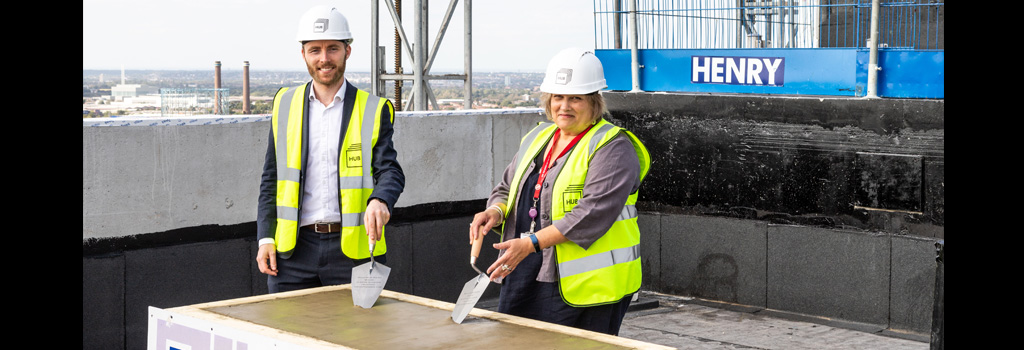
Thursday’s ceremony saw councillors, officers and representatives from HUB and contractors take part in a topping-out ceremony to mark the outer structure being finished and visit a show flat at the council-owned block, which will be named Malcolm Wicks House after the late MP for Croydon North.

Upon completion in 2021, Legal & General will take ownership of the second block, a 35-storey building with 251 one, two and three-bedroom apartments for sale. This will also have a rooftop garden, communal facilities on the ground and first floors and a ground-floor commercial unit.

London and Quadrant will take the remaining two blocks with 84 and 88 units respectively as a mix of shared ownership and London Living Rent apartments.

Councillor Alison Butler, deputy leader and cabinet member for homes and Gateway services.“Providing more genuinely affordable housing for people in need is one of our top priorities, and this excellent development will achieve that by delivering great council homes at council rents for dozens of local families.

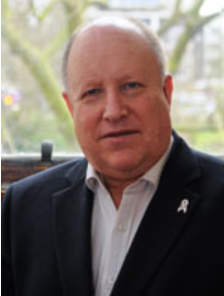
“With its upgrade to The Queen’s Gardens and new job creation opportunities, this regeneration scheme promises to be a real boost for Croydon residents and the town centre.”

Councillor Alison Butler, deputy leader and cabinet member for homes and Gateway services

Damien Sharkey, Managing Director of HUB, said: “We have worked closely with Henry Construction, Bridges Fund Management, and Croydon Council to design and deliver Queens Quarter, a hugely important development not just for its future residents, but for the people of Croydon.

“At HUB, we strongly believe that developers working hand-in-hand with local people produces the best results, and this development demonstrates this, with the delivery of high-quality, affordable homes, and outstanding public realm with the new Queen’s Gardens. We very much look forward to completing the project in 2021.”

The site was home to council headquarters Taberner House from 1967 until 2013, when employees moved into the adjacent Bernard Weatherill House and the site was earmarked for regeneration. Taberner House was demolished in 2015, planning permission was granted for the scheme in 2017, and work started a year later.

All content belongs to croydon.gov.uk

We do not claim any content to be our own.

Croydon appoints new interim chief executive

in Croydon

Monday (September 14), a new interim chief executive has been appointed at Croydon Council. Following a cross-party appointments committee meeting, Katherine Kerswell will take up the role.

Katherine comes to Croydon having most recently been the interim chief executive at Nottingham City Council, where she helped develop a new in-year budget and managed the Covid-19 response. As well as having over 15 years’ experience as chief executive at several large local authorities, she was the first director general to have responsibility for civil service reform at the Cabinet Office.

“We welcome Katherine to Croydon and look forward to working with her in the coming months.
“Katherine brings a wealth of experience and a strong track record of delivering for local communities. She will provide clear and steady leadership to help us through our financial challenges and Covid-19 recovery, and help to set strong foundations to deliver our priorities for the future.

“Katherine will work with members, officers and partners on this very challenging phase for Croydon as we look to recover from the pandemic and manage the significant impact on our finances while supporting our communities and our most vulnerable residents.”

Councillor Tony Newman, leader of the council

Katherine Kerswell said: “I’m really pleased to have this opportunity to join Croydon Council as its interim chief executive. Like many local authorities across the country Croydon is facing unprecedented challenges; taking on significant extra responsibilities as part of the Covid-19 response while maintaining those essential public services on which so many depend.

“I look forward to working closely with Croydon’s members, staff, partners and residents as we meet these challenges head-on, making sure we continue to support our communities, while working to create a sustainable future for Croydon.”

All content belongs to croydon.gov.uk

We do not claim any content to be our own.

20,000 people in Croydon want to see their council leader replaced – here’s why

in Croydon/politics

A campaign group is calling for a referendum on whether the borough should have a democratically elected mayor

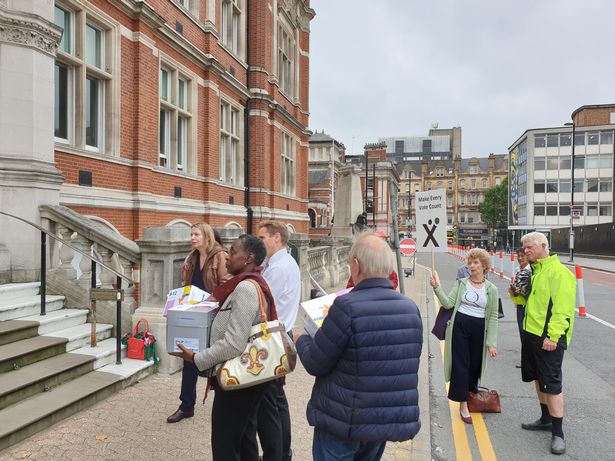
More than 20,000 people have signed a petition calling for Croydon’s council leader to be replaced by a directly elected mayor who would be chosen by the town’s voters.

The campaign for a democratically elected mayor of Croydon (DEMOC) was officially launched in February this year, and campaigners handed a petition to Croydon Council yesterday (Thursday, September 3).

They now want to see a referendum take place on May 6 next year – the same day the London Mayor and Assembly elections are due to be held.

DEMOC wants to see the council leader position, currently held by Councillor Tony Newman, replaced by a directly elected mayor who would be chosen by Croydon’s voters.

The group was started by a mix of residents’ associations and is supported by representatives from Labour and Conservative parties.

The group claims that one half of the borough is always ignored by the political leadership of the council as the voters in the north traditionally support Labour while voters in the south support Conservative.

In London, Hackney, Tower Hamlets and Watford all have democratically elected mayors.

Croydon Council does have a mayor who wears red robes and a chain, but this is a ceremonial position.

Under the new system, the ceremonial mayor would be renamed the chairperson of the council and would undertake the same responsibilities as currently.

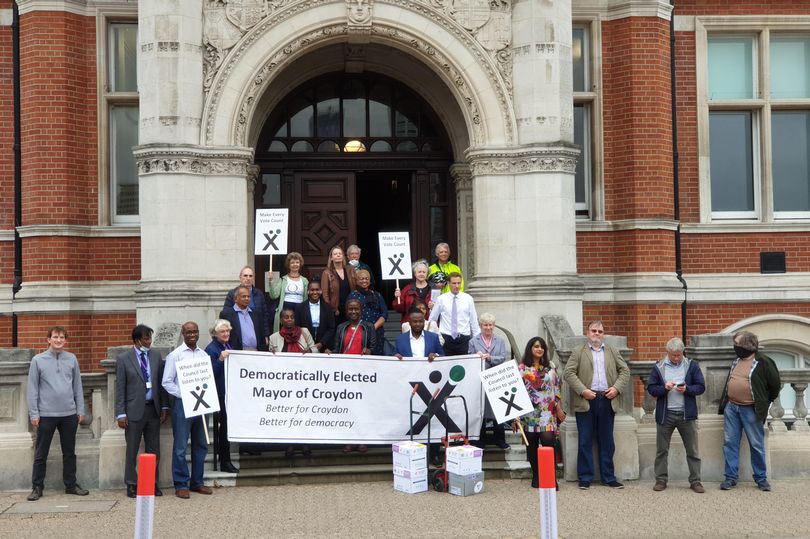
Members of the DEMOC group arrive at Croydon Town Hall to deliver a petition of more than 20,000 signatures.

Gerry Meredith-Smith, chair of the DEMOC campaign said: “There is a desire for change in our borough and a lot of momentum behind the idea of a referendum for a directly elected mayor.”

He asked whether the council would use the excuse of Covid-19 to “ignore a large number of people”.

One of the issues the group highlights is claims that planning permission is given out too easily under the current system.

While vice chair and member South Croydon Labour Party, Joanne Milligan, said the campaign is what is best for democracy regardless of which political party is in charge.

She added: “We want to change the system so that whichever political party the mayor comes from, they have to listen to people right across the borough from Norbury to Coulsdon and New Addington to Waddon.”

Now it is up to Croydon Council’s lawyers and electoral services to decide when a referendum can take place – the earliest date for this would be May 6.

But council leader Tony Newman said he did not think it would be the best route for the borough.

He said: “From a council perspective we are very much focused on the cross park governance review.

“My personal objection to the petition is we are the largest London borough with 70 councillors, it doesn’t seem the best to put total power into the hands of one individual.

“The petition has overwhelmingly been around the building of homes, at the last minute they included the pressures on the council’s finances – to use that is frankly shameful.

“My understanding is that the earliest it could possibly be considered is May, I would be very happy for it to happen then, we are confident that we would win the referendum.”

The campaign is also backed by Conservative MP for Croydon South, Chris Philp, who said it would ‘dramatically increase the accountability of those who run our town’.

The council now has one month to assess the validity of the petition before responding to the organiser.

After this a public notice will be published of the council’s decision.

All content belongs to mylondon.news

We do not claim any content to be our own.

Campaign to train 1,000 residents in mental health first aid

in Croydon/health

A course open to all Croydon residents is being offered to help people become mental health first aiders funded by Croydon Council and Transport for London.

The campaign comes after the mental health charity Mind revealed the scale of the impact of the coronavirus on mental health. More than one in five adults with no previous experience of mental health problems said their mental health is now poor or very poor following a survey over the summer.

In response the council and Croydon Covid-19 Mutual Aid – a voluntary network launched in March – has launched the two-day online course targeting people who are already providing informal support for local residents – whether you’re a sports coach, a trusted auntie or just a neighbour who cares.

“The pandemic has caused incredible loss, stress and uncertainty. However, in the face of huge challenges Croydon’s community has united to support each other and we are encouraging Croydon residents to keep volunteering and take this funded course in order to help others in our community. I am delighted we have been able to fund a thousand places for our mental health first aiders and really value our partnership with Croydon Covid-19 Mutual Aid”

Councillor Janet Campbell, cabinet member for families, health and social care

So far more than 200 applications have been received for the training run by Mental Health First Aid England and more than 100 people have already completed the course. Applications include more than 40 mental health organisations as well as churches, mosques, colleges, businesses, schools and charities.

Rowenna Davis, organiser for Croydon Covid-19 Mutual Aid said, “Whilst the physical suffering from coronavirus is well known, we are all still getting to grips with the mental impact. Many families have suffered directly or even lost loved ones and all of us still feel the pressures of lockdown.

“While volunteers can never replace frontline professionals, residents are often the first ones to recognise when someone they know or love is suffering. This training should help people recognise the signs of developing mental health problems and provide guidance for early intervention.”

To apply for the course email MHFA@croydon.gov.uk

You can find out more on Facebook at ‘Croydon Covid 19 Mutual Aid’ and Twitter @CroydonCovidMA

All content belongs to croydon.gov.uk

We do not claim any content to be our own.

Coronavirus: Further 2,988 cases confirmed in UK

in health

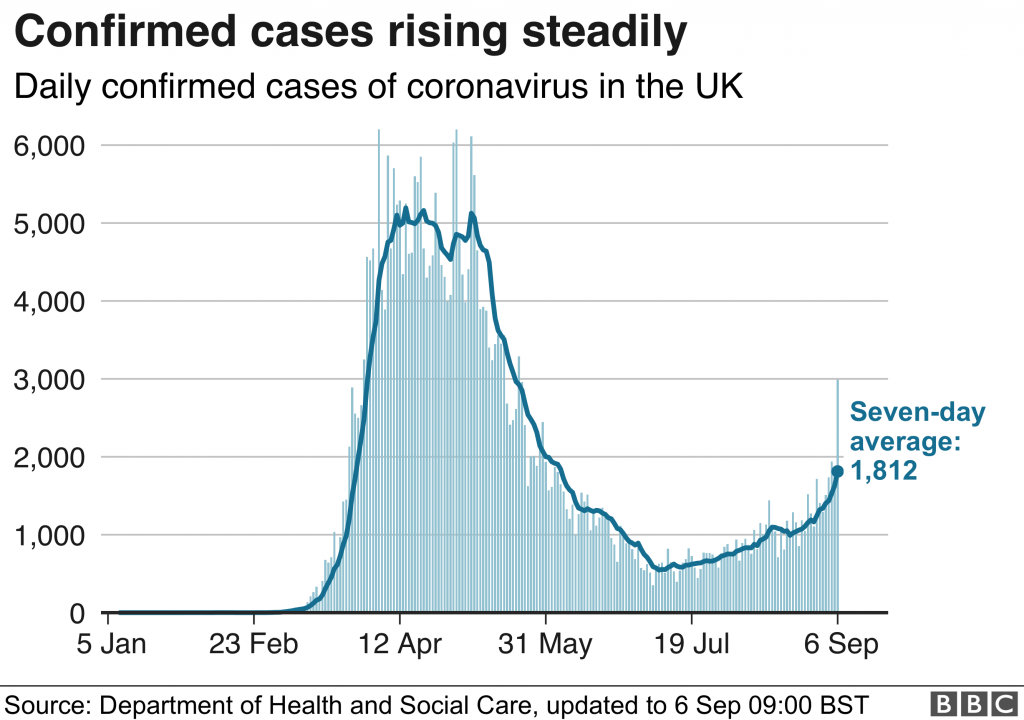
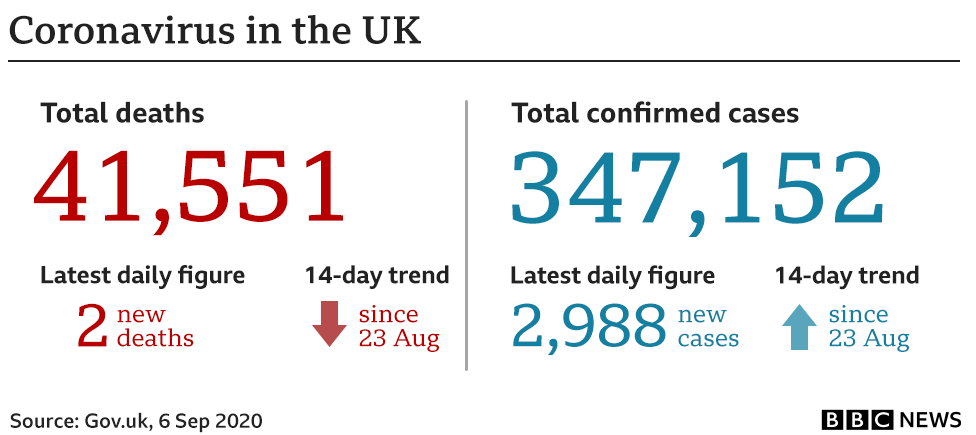
Sunday- September 6, a further 2,988 cases of coronavirus have been reported in the UK, government data showed.

It is the highest number reported on a single day since 22 May and a rise of 1,175 on Saturday, according to the UK government’s coronavirus dashboard.

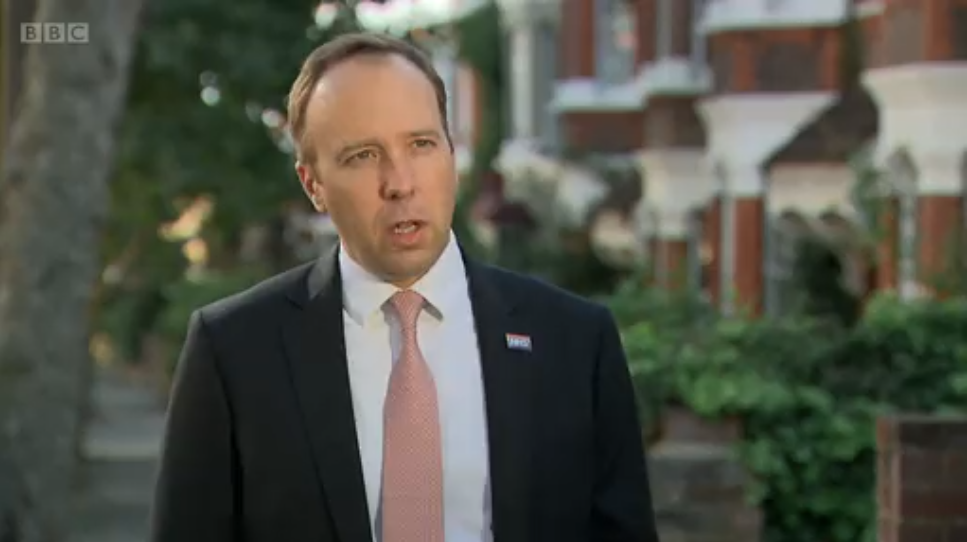
Health Secretary Matt Hancock said he was “concerned” about a rise in cases “predominantly among young people”.

Two further deaths within 28 days of a positive test were recorded, taking the total number of UK deaths to 41,551.

Mr Hancock added: “It’s so important that everybody does their bit and follows the social distancing because it doesn’t matter how old you are, how affected you might be by this disease, you can pass the disease on to others.”

“So don’t pass the disease on to your grandparents if you’re a young person, everybody needs to follow the social distancing.”

Despite the sharp rise in cases, Mr Hancock said the government was right to reopen schools “because of the impact on children of not getting an education”, adding that workplaces which have reopened are “Covid-secure”.

Scotland recorded 208 new cases on Sunday, its highest daily increase for more than 17 weeks.

Wales recorded a further 98 cases, its highest daily rise since 30 June, and Northern Ireland recorded 106 new cases, its highest rise since 25 April.

Overall, since the start of the pandemic, 347,152 cases have been confirmed in the UK.

‘A significant new spike’

The number of daily reported cases has been rising steadily and some of that has been put down to an increase in the number of people being tested.

Put simply, the more you test the more new cases you will find. But the jump of more than one thousand in a day is a significant new spike.

The health secretary says the government is concerned and has renewed official calls for more vigilance on social distancing.

What Matt Hancock and health officials are worried about is that the UK might follow the same path as France and Spain, where increases in infections amongst younger adults led after a few weeks to higher numbers of admissions to hospitals for older and more vulnerable patients.

The number of people seriously ill in hospital with Covid-19 has fallen and there were just two new daily reported deaths.

Medical leaders and ministers can only hope that the spread of the virus amongst younger people does not get passed on to the elderly and those with underlying health problems.

Labour’s shadow health secretary Jonathan Ashworth said ministers needed to “set out what is being done to get testing back on track and bring case numbers down”.

He said the increase in cases came on top of “the ongoing testing fiasco where ill people are told to drive for miles for tests, and the poor performance of the contact tracing system”.

Increased demand led bosses in charge of the coronavirus testing system to apologise after it emerged UK labs were struggling to keep up.

Screening capacity was described last week as being “maxed out” – 170,000 tests a day are being processed, up from 100,000 in mid June.

Prof Paul Hunter, an expert in outbreak response at the University of East Anglia, said some of the rise may be due to the system catching up after delays when it struggled to keep up with demand, but added it was still a “marked increase”.

“Sadly it is beginning to look like we are moving into a period of exponential growth in the UK epidemic, and if so we can expect further increases over coming weeks,” he said.

Birmingham had the single largest increase in cases overnight, and the majority of new cases were in the north of England, said Yvonne Doyle, Public Health England’s medical director.

But she said no single area accounted for the overnight change, with broad increases in Covid-19 cases across England.

The rise in positive tests came as tougher measures limiting household contacts were introduced in Bolton in an effort to stop coronavirus cases rising and prevent a full local lockdown.

The infection rate in the area has risen to 99 cases per 100,000 people per week – the highest in England.

Commenting on Scotland’s increase, First Minister Nicola Sturgeon said: “While this reflects the substantial opening up of the economy, it reminds us of the need to deploy counter measures.”

She added that the “first line of defence” is to “take greater care on face coverings, hygiene and distance”.

Meanwhile, speaking earlier on Sunday, Foreign Secretary Dominic Raab said the economy “needs to have people back at work”.

Mr Raab acknowledged there was likely to be a “bit more” remote working in future.

However, he added: “It is important to send a message that we need to get Britain back up and running, the economy motoring on all cylinders.”

Mr Raab also played down suggestions that coronavirus testing at airports would help travellers avoid mandatory quarantine.

All content belongs to bbc.com

We do not claim any content to be our own.

COVID-19 update: a message from Councillor Tony Newman, leader of the council

in Croydon/health

It has been great to see thousands of our young people now back in school with more to follow next week. The effort from schools, parents, pupils and council staff to make this happen safely continues to be phenomenal and I want to recognise and thank all those involved.

Everyone is playing their part, from the school caretakers who are facilitating extra cleaning, to the teachers supporting pupils, parents who are following social distancing rules in the playground and the children and young people themselves, who are returning after such a long absence.

It’s great to see so many walking and cycling to school – we’re encouraging this as much as possible, with more School Streets than any other London borough to help them do so safely, and our Streetspace schemes in neighbourhoods across Croydon. Thank you all and please keep up your efforts so that we can keep Croydon safe and our young people never experience such disruption to their education again.

Our infection numbers continue to be low in Croydon and this is down to you – the sterling efforts of our residents. By taking some simple steps – wearing masks, washing our hands and respecting social distancing – we are all literally saving lives. As pupils return to school and more people return to work, it is more important than ever that we all follow the public health guidance to protect our friends and family as sadly, no-one is immune to the loss of loved ones.

While the true cost of Covid has been the loss of life, we all know the economic impact of the pandemic will continue for years to come and local authorities are no exception. As a council we are now facing significant financial challenges from our response to Covid-19 and while we have received some funding, we still have not received the full extent promised by central government to cover our costs. We have acted swiftly to combat this but despite the savings we have made, Croydon is still facing a £49m overspend and, like organisations across the country we will inevitably have to make some very tough decisions in the weeks and months to come. We will be open with you about the challenges we face, listen to your views and protect your local services as much as possible. At the same time, I hope you will support us as we will continue to make our case to central government for fair funding for Croydon.

There is something we can all do to help Croydon’s economic recovery and that is to shop local as much as we can. Our Love Croydon, shop local campaign continues, celebrating our high streets and district centres and we are working with thousands of local businesses to support them. You can do your bit by choosing to shop local where you can – whether that’s enjoying a coffee out with a friend, a meal from one of our fantastic local restaurants, or buying your bread from the bakery on the corner. And if you want to join us in celebrating them, share your pictures on social media with the hashtag #LoveCroydonshoplocal – and check out some of our stories on @YourCroydon.

Have a great weekend – and good luck to those back to school on Monday.

Yours,

Tony

Councillor Tony Newman, leader of the council

All content belongs to croydon.gov.uk

We do not claim any content to be our own.

Details of Crystal Palace’s tough Carabao Cup Rounds Two and Three revealed

in football

With the fixture set to be played at the Vitality Stadium, Crystal Palace will face AFC Bournemouth in Round Two of the Carabao Cup.

The clash will be held midweek on 15th or 16th September. Should Palace progress against the Cherries, Round Three will be the following week – 22nd/23rd – and Round Four follows on 29th/30th. 

The Round Two draw was unseeded and regionalised in northern and southern sections. Round Three is unseeded and teams can play other clubs from the north or south.

If Palace defeat Bournemouth, they will face Manchester City in Round Three. The game will be played at the Etihad stadium.

All content belongs to cpfc.co.uk

We do not claim any content to be our own.

Covid-19: Five ways to avoid catching the virus indoors

in health

Good ventilation could be the key to avoiding coronavirus as autumn approaches and people spend more time indoors.

For months we’ve been told to wash our hands and maintain social distancing to beat coronavirus.

But scientists and engineers say we also need to think about the air we breathe, as children go back to school and more people return to offices.

Good ventilation matters in five ways.

1: If it’s stuffy, walk away

When you walk into a room and the air feels stale, something is wrong with the ventilation.

Not enough fresh air is being introduced, which increases your chances of getting infected by coronavirus.

Recent research shows that in confined spaces there can be “airborne transmission” of the virus – with tiny virus particles lingering in the air.

According to workplace regulations set up before the pandemic, everyone should get 10 litres of fresh air every second, and that matters more than ever now.

So if a place seems stuffy, just turn around and leave, says Dr Hywel Davies, technical director of the Chartered Institution of Building Services Engineers.

He says that it’s vital to have a flow of clean air:

“If you’ve got someone who’s infected in a building, and you’re bringing in plenty of outside air, you’re diluting whatever infectious material they’re giving off. You’re reducing the risk of other people becoming infected.”

2: Look up at the air conditioning

From offices to shops, air conditioning is welcome on hot days – but check the type of unit.

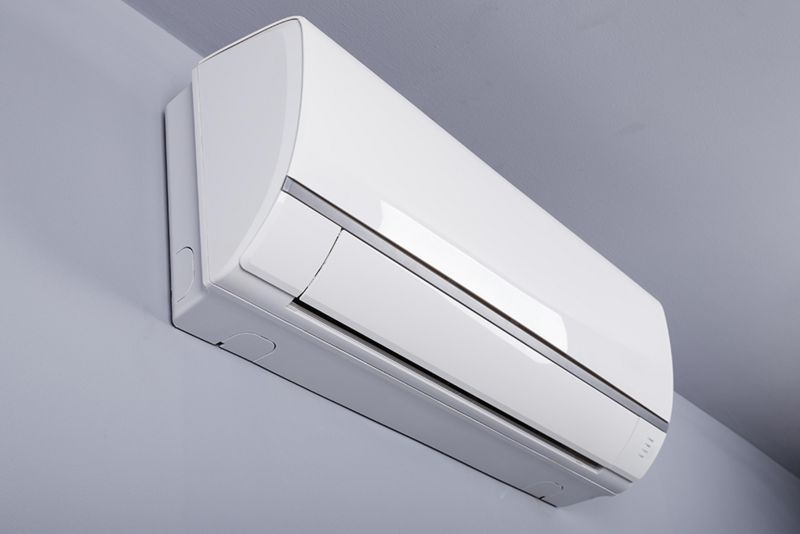
The simplest is a slender white box mounted on walls or ceilings, known as a split air conditioner.

This draws in air from a room, chills it and then blows it back out again.

In other words, it’s recirculating the air.

This is no problem for a quick visit but may be a risk over a period of hours.

A study of a restaurant in China blamed this type of air conditioner for spreading the virus.

One customer was “pre-symptomatic” – in other words, he was infected but did not realise because he had yet to develop symptoms.

Scientists reckon he released the virus as he breathed and talked, and it was pushed around the room by swirling air currents from the units on the wall.

The result was that nine other people became infected.

Dr Davies points again to the importance of fresh air:

“If there had been a good supply of outside air, very likely fewer people would have become infected – if any.”

3: Ask about the ‘fresh air ratio’

In a modern building where the windows are sealed, how can you get enough fresh air?

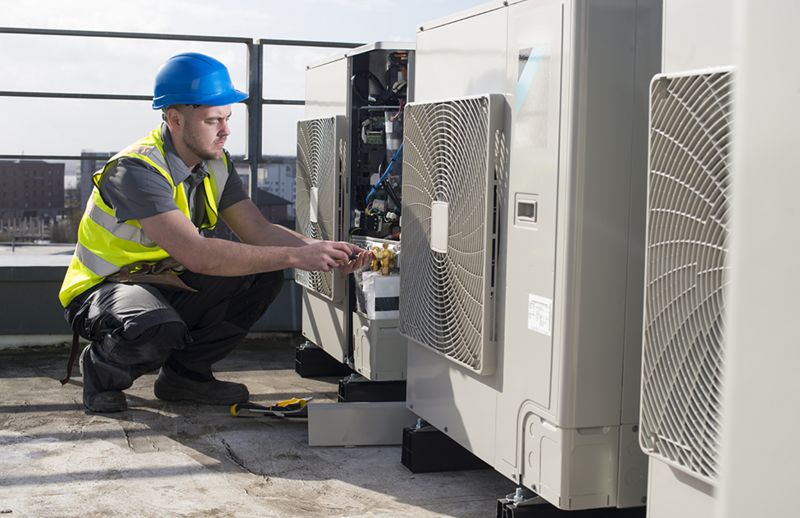
You’re relying on a ventilation system in which stale air is extracted from the rooms and piped to an air handling unit, often on the roof.

There, fresh air can be pulled in from outside and mixed with the old inside air, before being sent back into the building.

Given the risk of coronavirus infection, the professional advice is to maximise the fresh supply.

“Having 100% outside air or close to 100% is a good thing,” says Prof Cath Noakes of the University of Leeds and chair of the environmental panel of the government’s SAGE advisers, speaking in a personal capacity.

“The more fresh air, the less you’re running the risk of recirculating the virus through the building.”

The precise mix is decided by the building’s managers, who may be working for the owners or the tenants. 

The drawback to running 100% fresh air is the cost – the incoming air has to be heated in winter and cooled in summer, all of which requires energy.

4: Check if there’s virus in the filters

A modern ventilation system will have filters but these are not fool-proof.

In the US, researchers investigating the Oregon Health & Science University Hospital found that traces of coronavirus were trapped by the filters but some had somehow slipped through.

Prof Kevin van den Wymelenberg, who led the project, believes that swabbing the filters could reveal if there’s someone infected working in a building.

In South Korea, a call centre on the 11th floor of an office building saw one person infect more than 90 others.

If the filters had been checked more frequently, the presence of the virus might have been spotted sooner.

Prof van den Wymelenberg says data from filters can “show us where to punch and when to punch” in tackling infections.

5: Watch out for draughts

Talk to any expert in the field and they will say that fresh air is the key.

But one specialist in modelling the movement of air says it’s not that simple.

Nick Wirth used to design Formula 1 racing cars, and now advises supermarkets and food-processing companies on how to manage air flow to keep people safe.

He worries that if someone sitting beside an open window turns out to be infectious, they could shed virus to others downwind.

“If you open a window, where is the air going to go?” he asks. “We don’t want people in a direct line of that airflow.

“More fresh air in general is better but if it’s flowing horizontally and full of virus it could have unintended consequences.”

I put this scenario to Prof Cath Noakes.

She says the benefits of plentiful fresh air diluting the virus will outweigh any risks.

An open window might lead to more people receiving the virus but in smaller, less risky amounts, in her view.

It’s no surprise there are disagreements – there’s a lot we still don’t know about the virus.

But the air we breathe is bound to be part of any effort to make buildings safer.


All content belongs to bbc.com

We do not claim any content to be our own.


Go to Top