Author

Jay Foster - page 3

Jay Foster has 123 articles published.

Hip hop star Loyle Carner returns to his roots for community garden

in Croydon

Loyle Carner help put the finishing touches to a transformed forecourt in a socially-distanced planting day the latest stage in Croydon’s regeneration of Thornton Heath.

Local residents were invited to the new garden in the Ambassador House forecourt which has been installed with the help of volunteers from the National Citizens Service, a youth offenders’ rehabilitation programme.

The participants were members of the community interested in being part of a future gardening club and local star Loyle Carner, who was at the launch event for the forecourt’s improvements last autumn, was also in attendance.

He said, “It’s great to be back home to help bring together our community in a way that benefits the people and the environment. I want to bring nature back to my local community and encourage others to support this movement. Open your eyes, pick up rubbish, do things for the people you care about, and they will do things for the people they care about and so on.”

The forecourt’s improvements came about in a partnership between the council and Timberland through the manufacturer’s Nature Needs Heroes campaign – run by its design consultants and social enterprise Urban Growth – and London National Park City.

The idea is to transform urban areas, greening them and promoting positive change for local communities, and the partnership has resulted in two urban spaces in Croydon reshaped into attractive community hubs: the Ambassador House forecourt and the BRIT School garden.

Alongside the new garden, a storage shed for events and activities has been installed by Tomos Design, which incorporates a gallery of locally produced artwork, created as part of their community engagement last year. Local artists Vân Dang and Bareface have also brought their artistic skills to the forecourt delivering colourful artwork on the walls and steps.

“It is wonderful seeing the community coming together like this and I am seriously impressed by this fantastic garden which will also provide a space for performance, art and creative projects. We are intent on making Croydon greener and healthier and transformative projects such as this can only help the wellbeing of our residents and improve their local environment. I would also like to thank the community in Thornton Health for their involvement, as well as our partnership with Timberland, Urban Growth and London National Park City, and I eagerly look forward to seeing how the garden will benefit the community in the future.”

Councillor Oliver Lewis, cabinet member for culture, leisure and sport

The monthly gardening club will be held in the new community garden on the first Saturday of every month starting on September 5th from 1pm to 4pm. There will be seasonal themes and it will be open to all.

All content belongs to croydon.gov.uk

We do not claim any content to be our own.

 

Planning approval for new town centre university campus

in Croydon

From September 2021 Croydon town centre will get a new London South Bank University (LSBU) campus after planning permission was granted to convert an empty Art Deco office building.

Students of health and social care, business and finance will be based at the Grade II-listed Electric House on Wellesley Road after the council granted planning approval and listed building consent this week.

The university has also now signed a lease agreement for the new campus site, which will offer courses including degrees in nursing, accounting, business management and a Masters for chiropractors.

The move follows a partnership agreed in 2019 between the university and the council as the first step towards a new Croydon Creative Campus offering a mix of business, culture and learning to boost the borough’s regeneration and career prospects for Croydon’s 93,000 people under 18.

The university will convert the four-storey Electric House to include a lecture theatre, classrooms and a café. For nursing students, the building will also include nursing skills suites that replicate hospital wards.

“This is another real vote of confidence in Croydon, as London South Bank University’s new town centre campus will bring fantastic education and career opportunities for the young people of this borough, deliver more local jobs and provide a real boost to our economy.

“With university students already studying at nearby Croydon College and Electric House now set to be transformed into LSBU’s new campus, Croydon is fast becoming a south London hub for higher education in line with the council’s long-term vision for a creative campus in the borough.”


Councillor Tony Newman, leader of the council

Professor Patrick Bailey, LSBU Provost, said, “We are delighted LSBU Croydon has taken another big step forward. Croydon is the perfect location for our new university campus which will train the next generation of nurses and business leaders. LSBU Croydon will set graduates up for successful careers by preparing them to hit the ground running.”

Electric House was constructed as an electricity showroom between 1939 and 1942 and still has original features including marble floors. It has been vacant since the Home Office moved out in 2013.

LSBU’s business incubation facility houses 90 businesses and is ranked among the top 15 university-run incubators in the world, while its employer-supported learning framework has made it a leading UK university for graduate employment.

All content belongs to croydon.gov.uk

We do not claim any content to be our own.
Council supports schools ahead of September reopening

in Croydon

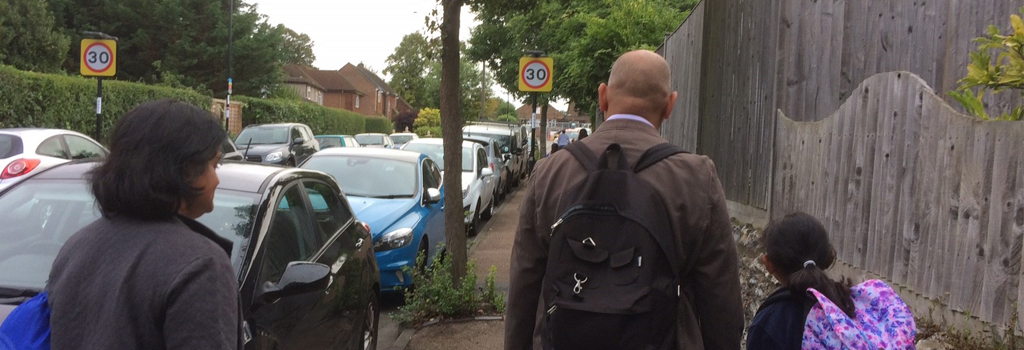
Croydon school children’s parents have been updated this week on each school’s individual arrangements to limit the Covid-19 risk when a new academic year starts in September.

As a result of the government confirming earlier this summer that schools nationwide will return in September, headteachers in Croydon have written to parents outlining what tailored measures they have introduced to safely allow all pupils to return.

These measures include weekly deep cleaning, socially-distanced bubbles by year group, one-way systems in school buildings, staggered start and finish times to limit unnecessary contact, Personal Protective Equipment for staff and additional training days on the new arrangements. Schools are also encouraging pupils to work or cycle to school which not only reduces pressure on public transport but is also good for mental and physical health.

Schools have the responsibility to plan their own individual way of safely reopening for September that meets their own circumstances while following government guidelines, meeting health and safety requirements and receiving council support and advice.

Each school has completed an updated Covid-19 risk assessment that is first approved by their board of governors and then shared with the council. These consider everything from hygiene measures, catering and the school run to safeguarding and supporting children with Special Educational Needs.

Some e-learning will continue in combination with face-to-face lessons if schools have teachers or pupils who are at higher risk from Covid-19. Each school has also adapted their curriculum to both help pupils catch up and to reflect any other changes, including timetables that encourage outdoor PE lessons and course updates including Black history.

As well as offering regular support to headteachers, the council is also providing youth mental health first aiders through the Young Londoners’ Fund to advise any children needing help with their wellbeing on their return to school. Teachers and other staff also have access to the adult community Mental Health First Aid programme which is being funded through the council and Transport for London.

Supported by the council, schools have developed plans for managing suspected or confirmed cases of Covid-19. Just like throughout lockdown, if headteachers do flag any suspected or confirmed Covid-19 cases they will work with the council and the National Institute of Health Protection to take appropriate action in line with Croydon’s local outbreak control plan.

“Croydon schools have been working hard to ensure that they are able to safely welcome back all pupils from September, and each one has developed their own tailored plan to do this with council help and by following government guidelines.


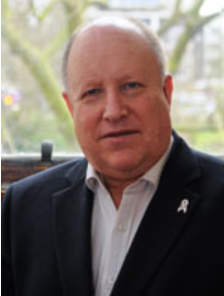
“I want to thank all head teachers, governors and their staff in Croydon for doing everything asked of them and more to put plans in place to safeguard and manage risk against Covid-19, and put our schools in the best possible current position in planning for the year ahead.

“Schools will continue to do all they can so staff and pupils alike are kept safe while they carry out the crucial job of educating our young people and improving their future prospects.”

Councillor Alisa Flemming, cabinet member for children, young people and learning

All content belongs to croydon.gov.uk

We do not claim any content to be our own.

Croydon Council ‘cannot guarantee’ avoiding bankruptcy

in Croydon

The Director of Finance has said, a cash-strapped council “cannot guarantee” it will avoid bankruptcy.

 Croydon Council faces a £65.4m overspend in the 2020-21 financial year but only has £10m of reserve funds.

At a meeting on Tuesday, finance director Lisa Taylor said the impact of the Covid-19 pandemic meant a “balanced budget” could not be assured.

Meanwhile, the departure of the Labour-controlled council’s chief executive Jo Negrini was also announced.

If the council were to issue a Section 114 notice – a ban on all but essential spending – it would become only the second council to do so in 20 years, after Northamptonshire County Council went bust in 2018.

Council leader Tony Newman has insisted the authority will not be forced to ban spending.

‘Covid shortfall’

Ms Taylor said: “There are savings this year in the budget which we are unable to deliver and we will need time to deliver them in future years.

“Likewise with additional income this year we have been unable to deliver that. I can’t guarantee that we won’t issue a 114 notice.”

Croydon Council said it had been “proactive” about addressing its financial situation by taking measures including setting up an independently chaired finance review panel and freezing recruitment.

A spokesman said the authority had also spoken to the government about financial support for “revenue pressures” to tackle its budget gap.

The spokesman said: “Our leadership continues to push ministers for a fair deal for Croydon on both historic underfunding and our Covid-19 shortfall.”

In June, the Local Democracy Reporting Service reported that up to 200 people could lose their jobs at the council, which employs more than 6,000 people, including in schools.

‘Saddled with debt’

Meanwhile, the council has announced its chief executive Jo Negrini is leaving her post after four years.

In a statement, she said: “This is a challenging time for local government and I am leaving with all the structures and the team in place to navigate through this post-Covid period and see the council through the next stage in its journey. 

“I loved working for the people of Croydon. It’s an amazing place to work.”

But Tim Pollard, leader of the Croydon’s Conservative opposition, said he was “intrigued” by the timing of Ms Negrini’s departure.

“The town is saddled with masses of debt, it has financial problems fit to bust a gut,” he said.

“I can only assume that the chief executive had a massive breakdown in communication with the political leadership.”

Shifa Mustafa, Croydon’s executive director of place, will take the role up on a temporary basis.

All content belongs to bbc.com

We do not claim any content to be our own.

15 commuter towns Londoners are moving to, according to an estate agent

in Housing

After five months of lockdown, with millions of Londoners working from home rather than going to their offices every day, we have reached the “new normal”.

And many have taken this opportunity to question whether they need to live in London at all? With high rents resulting in a lower quality of life and making it even more difficult to save for a deposit, even the houses the average Londoner can buy are smaller and less luxurious than those they can afford outside the capital.

Estate agency Hamptons International’s summer 2020 market report has revealed this “resurgence of the suburbs” is due to two major factors. Some Londoners are after large homes with gardens having seen their importance during the lockdown and homes in the suburbs offer better value than those in the city.

According to the report, 34 percent people registering interest to buy in the suburbs around London currently live in the capital, the highest peak of interest in the suburbs since 2016.

What exactly counts as a suburb of London is hard to define. Each borough has its own “town centre” style area and several boroughs together make up Central London and Inner London.

Even boroughs at the edges of the city, like Hounslow or Croydon feature urban areas where rents and house prices are higher due to public transport connections.

However there are places around the city’s edge which are growing increasingly popular with people looking to leave London but still be able to travel to work a few days a week.

The report said: “A greater willingness to contemplate a move to the country may be one of the longer-lasting consequences of lockdown.

“Working from home – which was supposed to be a temporary arrangement – seems set to become a way of life for more employees at every level in organisations. The length of the commute to London has always been a prime consideration in the choice of a home to buy or rent.

“But househunters are becoming more focused on such features as garden size and space for a home office. A kitchen table tends not to be a long-term substitute for a desk.”

It added: “Most people hoping to leave the city want to move to a location in the South.

“Close to one-in-five (19 per cent) applicants who registered in a Southern branch in April 2020 were Londoners. This was up from 12 per cent in April 2019 and above the last peak of 13 per cent in April 2016.

“Londoners made up seven percent of those registering in branches in the Midlands, but there was a small annual fall in the share of London applicants registering to buy in the North.

“The yearning to relocate to the Lake District may be strong, but, in practice, many workers suspect they will have to be in their central London office for one or two days a week, as lockdown eases.”

So which destinations around London are the most popular with tourists and how far are they from the geographical centre of London, defined as being just off Trafalgar Square?

15. Brentwood, Essex – 20 miles

14. Mole Valley, Surrey – 16 miles

13. Gravesham, Kent – 22 miles

12. Luton, Bedfordshire – 29 miles

11. Elmbridge, Surrey – 23 miles

10. Medway, Kent – 28 miles

9. Aylesbury Vale – 37 miles

8. Watford, Hertfordshire – 16 miles

7. Reigate & Banstead, Surrey – 16 miles

6. Sevenoaks, Kent – 21 miles

5. Thurrock, Essex – 18 miles

4. Tandridge, Surrey – 19 miles

3. Dartford, Kent – 15 miles

2. Epping Forest, Essex – 17 miles

1. Broxbourne, Hertfordshire – 18 miles

Have you decided to move out of London and buy a place in the suburbs? Tell your story by emailing qasim.peracha@reachplc.com

All content belongs to mylondon.news

We do not claim any content to be our own.

Coronavirus: UK to ramp up coronavirus monitoring programme

in health

In the government’s monitoring program to get a better idea of the spread of the virus, Coronavirus tests are to be carried out on more people.

The Office for National Statistics’ Infection Survey will test 150,000 people a fortnight in England by October, up from 28,000 now.

The survey is separate from the mass testing programme of people with symptoms to diagnose cases.

For the survey, a representative sample of the general population is tested.

That means it can provide estimates for the true spread of the virus.

The diagnostic testing programme, which provides daily totals, largely relies on people with symptoms coming forward.

Some people do not display symptoms when they are infected so the daily totals are an underestimate of the amount of infection that is around.

As part of the expansion of the programme, data will also be gathered in Wales, Northern Ireland and Scotland.

Coronavirus tests are to be carried out on more people in the government’s monitoring programme to get a better idea of the spread of the virus.

The Office for National Statistics’ Infection Survey will test 150,000 people a fortnight in England by October, up from 28,000 now.

The survey is separate from the mass testing programme of people with symptoms to diagnose cases.

For the survey, a representative sample of the general population is tested.

That means it can provide estimates for the true spread of the virus.

The diagnostic testing programme, which provides daily totals, largely relies on people with symptoms coming forward.

Some people do not display symptoms when they are infected so the daily totals are an underestimate of the amount of infection that is around.

As part of the expansion of the programme, data will also be gathered in Wales, Northern Ireland and Scotland.

Meanwhile, Health Secretary Matt Hancock said he wanted to see more rapid-turnaround testing for the public.

Currently most tests that are taken have to be sent off to labs to be processed – and so people often wait a day for the results.

But the government is assessing the accuracy and effectiveness of new types of tests that can deliver results on the spot.

He said this was a “huge priority” for government as it could make it easier to reopen parts of the economy and perhaps reduce the restrictions around quarantining when you come from high-risk areas abroad.

But he was unable to give a timeframe for that as the tests have not be proven to work yet.

Spotting the big picture quicker

The ONS study helps us to understand whether rising numbers of people testing positive is down to more testing or more virus.

It uses a small sample of people to inform the national picture, like tasting soup with a teaspoonful.

At the moment, spotting just 10 infections a week, it takes a while before it can tell whether a rise is a spike or just a blip.

A bigger spoon means it will spot the national and regional trends faster.

That means we’re less likely to be caught unawares if the virus comes back with a vengeance in the autumn.

But it still won’t see many infections in a town or small city, so won’t become our main local outbreak detector.

Speaking about the ONS survey expansion, he said the monitoring programme was currently the “single most important tool” the government had for making policy decisions around coronavirus because it helped it understand how the disease was spreading.

Speaking on BBC Breakfast, Mr Hancock said expanding the ONS survey would allow the government to be “more accurate and more localised” in its response.

He added that it would help the government with its “biggest challenge”, which was finding people who were asymptomatic but could still pass the virus on.

It tests thousands of people in households representative of the population, whether or not they have coronavirus symptoms.

The results help experts estimate the weekly reproduction (R) number and growth rate of the virus – which tells us if new coronavirus infections are rising or shrinking.

The survey also provides important information about the socio-demographic characteristics of the people and households who have Covid-19.

According to last week’s results, coronavirus cases across England appear to be levelling off, with an estimated one in 1,900, or 28,300 people currently infected.

Greater detail

At the start of the pilot study, led by the ONS and the University of Oxford in partnership with the Department for Health and Social Care, around 20,000 households were invited to take part, with the aim of achieving data from around 10,000 households.

Since the end of May, additional households have been invited to take part in the survey each week (roughly 5,000 a week), with an additional 15,000 households contacted in July.

By beefing up the numbers participating, the ONS will be able to assess what is going on in much greater detail.

Professor Sir Ian Diamond, the UK’s National Statistician, said that the survey would be the biggest of its kind in this country.

“Vigilance is key to containing this pandemic and the extra data on the spread of infections and antibodies at local level will be invaluable to the planning of effective local responses.”

Prof Sarah Walker, of Oxford University, who is a co-leader of the survey, added: “The added numbers will give us an awful lot of information about how this is all going to play out over the next six months.

“The key question is ‘can I get it again?’ and because we are going back to households and because we will have enough people we can answer that question, not just overall, but by age, gender and ethnicity.”

The extended survey should be up and running by October when government experts are expecting there to be surges in infection.

People who take part have routine nose or throat swabs to see if they currently have coronavirus.

The survey currently has 60,000 people enrolled – not all of them are tested every fortnight.

The aim is to increase this to 400,000 people across the entire project in England, and there will be proportionate increases in Scotland, Wales and Northern Ireland.

All content belongs to bbc.com

We do not claim any content to be our own.

Council joins innovative partnership helping young ex-offenders

in Croydon

The first London borough to join with an award-winning social enterprise that helps ex-offenders into work is Croydon.

Over the next three-and-a-half years the council and employers within the borough will partner with The Skill Mill to help vulnerable young people break the cycle of re-offending and gain work experience.

In groups of four at a time the youngsters will take part in an intensive six-month work programme of paid work that will result in a nationally-recognised qualification and the opportunity to progress into further employment or training.

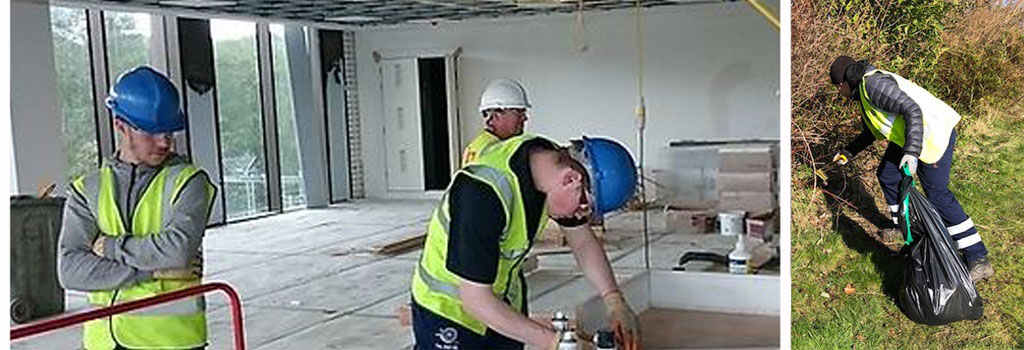
Employers include Balfour Beatty, Kier Construction, Thames Water and the council’s own jobs brokerage service Croydon Works and the young people – aged between 16 and 18 – will be involved in environmental and site maintenance jobs including park and garden preservation.

David Parks is The Skill Mill’s managing director and started the social enterprise in Newcastle six-and-a-half years ago.

He said: “We mostly work in the north and so it’s fantastic this partnership with Croydon has come about. The Skill Mill focuses on some of the most challenging young people who otherwise wouldn’t have the chance to be taken out of that cycle of violence. Just 12% of the kids who come through the programme re-offend compared with the national average of 43%. We are trailblazers and no-one else is exclusively employing young people who are ex-offenders.”

All of the young people involved in the programme live in the borough and this week the first cohort began their six months of work, starting with garden maintenance.

One of them, Nathan aged 17, said, “It’s a great opportunity for me as someone who’s had a bit of a bad past.”

Mel Comber has been seconded from the council to work as The Skill Mill supervisor for Croydon, and is overseeing the young people on a daily basis.

He said, “It’s all about giving people a second chance and trying to point the youngsters in the right direction to get some stability in their life. Not only that but we will be doing such things in the community as tidying up places that will improve the look of the area and so make an environmental difference.”

“Our partnership with The Skill Mill is the result of the excellent work we did with vulnerable adolescents in the youth offending team at the Turnaround Centre. Our head of adolescent services, Hannah Doughty, had previously worked with The Skill Mill in Liverpool and saw what an enormous difference the social enterprise had made to the lives of young ex-offenders. Our youth offending team really does make a difference by working tirelessly to reduce the level of offending and improve the lives of the young people”


Councillor Alisa Flemming, cabinet member for children, young people and learning

“I am proud that Croydon is the first London borough to partner with The Skill Mill. As a council we are committed to improving the lives of disadvantaged young people and to presenting them with work opportunities, including those aiming to lead a fulfilling life away from crime. In the current crisis employment support for youngsters is needed more than ever and I am delighted that through this innovative programme they will also be making a positive contribution to their community.”


Councillor Manju Shahul-Hameed, cabinet member for economy and jobs

The Skill Mill programme, jointly commissioned by seven local authorities, is supported by the Life Chances Fund awarded by The National Lottery Community Fund.

All content belongs to croydon.gov.uk

We do not claim any content to be our own.

GCSE performance rises for Croydon students

in Croydon

Croydon students, based on early results show that they have done better in this year’s GCSEs despite the disruption caused by Covid-19.

Last spring all GCSE and A-Level examinations due to be sat in summer 2020 were cancelled because of the Covid-19 lockdown. Instead, GCSE students nationwide received grades today (Thursday) based on their own school’s analysis of past performance.

With 63% of the borough’s school results in so far, Croydon schools have achieved a provisional 74% pass rate in English and Maths at grade 4 and above and a 53% pass rate at grade 5 and above. This compares to 44% and 41% respectively in 2019.

For any students who did not get the grades they wanted or want support with their next steps, the council is running a series of events open to people aged 16-18 who either live in the borough or attend a Croydon school. For more information, call 0208 726 7485 or email post16@croydon.gov.uk

For wider council assistance, contact educationenquiries@croydon.gov.uk. This account reaches Shelley Davies, Mike McKeaveney, Denise Bushay, Sarah Bailey and Julie Ralphs.

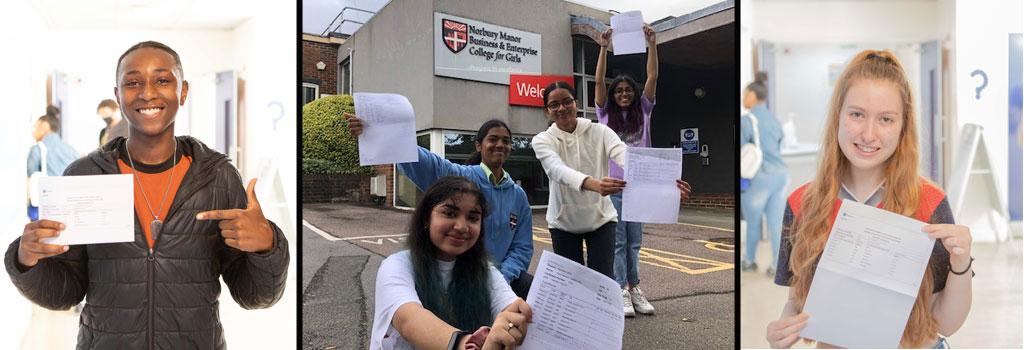
At Norbury Manor Business and Enterprise College for Girls, students scored a 100% GCSE pass rate and the number of results with a grade 4 pass or higher in English and Maths rose from 75% last year to 83% this year.

Deputy headteacher Markieu Hayden, who will become headteacher in September after the retirement of outgoing head Amanda Compton, said: “Norbury Manor has continued with our upwards trajectory of results building on last year.

“Despite the disruption to their learning, the students have remained focused and committed to their studies and have fully participated in online learning and working with their teachers throughout lockdown.”

Shamyla Ahmad, 16, got the top grade 9 in French, Geography, English Literature, Biology, Chemistry, Physics and Religious Studies, two 8s in Computer Science and Maths and a 7 in English Language. She said: “I was very nervous; I didn’t expect this at all because I saw a lot in the news about people being downgraded. I put in a lot of hard work and I’m glad it paid off.”

Ayla Aziz, from Thornton Heath, got two grade 9s, three 8s and five 7s. She said: “I think the school has been very supportive in bringing me towards this goal. I’m very relieved and want to do Maths, Biology and Chemistry at sixth form.”

Because of a decline in admissions, this academic year was the last ever at St Andrew’s C of E School in Croydon, where 71.7% of Year 11 students got at least a grade 4 in English and Maths and 35.8% got grade 5 or higher.

Headteacher Jonathan Harris said: “They have had some fantastic teaching, group tutoring and experiences which have resulted in some of the best exam results the school has ever seen.”

“Even at this early stage it’s already clear GCSE students across the borough have had brilliant individual successes despite the disruption to their learning from Covid-19.

“Just as they supported schools throughout lockdown and made themselves available to A-level students needing advice last week, our education director Shelley Davies and her colleagues are here to help anyone who did not get the GCSE grades they were hoping for. So please get in touch with her team if you want help with choosing what to do next.”


Councillor Alisa Flemming, cabinet member for children, young people and learning

All content belongs to croydon.gov.uk

We do not claim any content to be our own.

Contract extensions for four Palace players

in football

Jeffrey Schlupp, James McArthur, Martin Kelly and Stephen Henderson have each signed contract extensions with the club, Crystal Palace F.C. are delighted to confirm.

Schlupp has made 97 appearances for Palace since joining the club in January 2017, and said of his extended deal: “Last season was a difficult one at times due to injuries.

“However, I’m delighted to have finished it off with a goal against Spurs, feeling 100% and extending my time with the club. I’m already looking forward to hitting the ground running in a few weeks’ time when the season restarts.”

McArthur, who is entering his seventh season with the south Londoners, commented: “When I arrived here in 2014, I didn’t consider the fact that, six years later, I would be making my 200th appearance for the club as I did against Bournemouth last season. I’m proud of what the club has achieved during my time and I’m delighted to be carrying on here.”

Kelly, who has clocked up 145 appearances for the Eagles since his move from Liverpool, said: “Having lived here for six years, my family are settled in south London and I’m extremely happy at Palace; it’s a close-knit club. I’m proud to have played my part in us establishing eight consecutive seasons in the Premier League, and I’m looking forward to seeing what this squad can achieve this coming season.”

Experienced goalkeeper Henderson has also extended his stay in south London. The shot-stopper, who signed from Nottingham Forest in the summer of 2019, said: “I’ve really enjoyed working with Dean [Kiely], plus Wayne [Hennessey] and Vicente [Guaita], too; it’s a great group to be part of. I’m delighted to continue my time with Palace, and I’m ready to contribute should I be called upon.”

All content belongs to cpfc.co.uk

We do not claim any content to be our own.

Crystal Palace launch the 200 Club

in football

With BT Sport’s, it has been a big season for Crystal Palace’s history captivating Team of the Eighties documentary to the club staking its claim to being the world’s oldest professional football club.

And now it is time for 56 Palace icons to have their famous time in the red and blue cemented, with the launch of the 200 Club. 

The 200 Club honours former Eagles as far back as 1907 to current day first-teamers in Joel Ward, James McArthur and Wilfried Zaha and to those who have only just recently departed SE25 in Julián Speroni. 

But no matter what decade, century or era these players represented the south Londoners, they all share one thing in common: a minimum of 200 appearances for Crystal Palace Football Club. 

Jim Cannon tops the pile with 660 appearances across the majority of the ’70s and ’80s, whilst Macca is the most recent addition to the 200 Club hall of fame, with the midfielder already finding himself level with Peter Wall’s 208 Palace appearances. 

There’s plenty of interesting Palace nuggets to learn, players to discover outside of your own Selhurst Park-going days and unique links across decades. To find out all you need to know, click here to have a look through the players who make up the honourary club.

All content belongs to cpfc.co.uk

We do not claim any content to be our own.


Go to Top