Author

Jay Foster - page 5

Jay Foster has 123 articles published.

18-year-old Midfielder Jake Giddings Joins Academy

in football

The eighteen-year-old midfielder, Jake Giddings, has signed for Crystal Palace’s Academy on a two-year professional contract.

Giddings most recently played for West Ham United, who he joined at the age of five, and signs for Palace after a short, successful trial period in March.

Having penned his deal in south London, Giddings explained his motivation for joining the Eagles’ Academy:

“My dad’s side of the family are all West Ham, but my mum’s side are from south London. So they’re all Crystal Palace fans.

“Also, the way Shaun Derry, the Under-23s manager, was, the way the strength and conditioning coaches were, the way they worked with me, spoke to me, they really wanted to push me and that was a massive bonus”

Giddings is currently training with the club’s Under-23s.


All content belongs to Crystal Palace F.C

We do not claim any content to be our own.



£1.9m Funding For More Covid-hit Small Businesses

in Croydon

The grant of up to £10,000 to help with the financial impact of Covid-19 to the number of small and medium-sized businesses that can qualify has widened by the Croydon Council.

To date the council’s discretionary grants scheme has given over 250 Croydon small and medium-sized businesses (SMEs) a total of £943,000 to help with their Covid-19 costs under a first round of applications aimed at those who had lost 40% in income.

This week the council has opened a second round of applications for more Croydon businesses to benefit from a share of £1,964,250 – with wider criteria so dozens more businesses that have lost 20% income since Covid-19 can also qualify.

Businesses with a rateable value of more than £51,000 can receive grants of up to £10,000; those with a rateable value of less than £51,000 can receive up to £5,000 if they have property costs of more than £1,000, or up to £2,500 if their property costs are under £1,000.

To be eligible, businesses must have been trading on 11 March and not received other government funding excluding the Self-Employed Grant or the Job Retention Scheme. The scheme ends on 28 August. Find out more via the council website.

One of the Croydon businesses that benefitted under the first round was Leapfrog Day Nursery in Sydenham Road, which received grant funding of £5,000. This enabled them to purchase equipment, such as steam cleaners, to help them welcome children back safely, and new educational resources about hygiene.

Owner Amina Bryant said: “The funding has really helped us to be able to continue doing what we love; caring for Croydon’s children and keeping them safe.”

Since the start of the pandemic, Croydon Council has distributed around £49m in government grants to more than 3,500 businesses.

“Whether it’s help with business rates, boosting recruitment or encouraging investment, supporting local companies is a key part of what we do – especially since Covid-19.

“That’s why we launched our discretionary fund that has already helped over 250 local SMEs, but we know there are still more eligible businesses out there. So if your business has not yet received any government Covid-19 money, you could be eligible for up to £10,000 from our fund.”

Councillor Manju Shahul-Hameed, cabinet member for economy and jobs


All content belongs to croydon.gov.uk 

We do not claim any content to be our own.

 

Coronavirus Prompts PM into Obesity Crackdown

in health

New measures to curb obesity is set to be announced by the prime minister next week, and they are expected to include a ban on TV junk food adverts before 21:00.

It comes amid growing evidence people who are overweight or obese are at greater risk from coronavirus.

The measures are yet to be finalised but are also likely to include a ban on online ads for unhealthy foods, and limits on in-store promotions.

One food industry leader said it was a “slap in the face”.

The move marks a change in stance by Prime Minister Boris Johnson, who has previously criticised levies on foods high in salt, fat and sugar – and described his views on tackling obesity as “libertarian”.

Mr Johnson’s experience in intensive care during his treatment for Covid-19 is thought to have contributed to his changing position.

Speaking during a visit to a GP surgery in east London, he said that while he was not normally one for “nannying or bossying”, the country did need to lose weight to protect from a second spike.

He said: “Obesity is one of the real co-morbidity factors. Losing weight, frankly, is one of the ways you can reduce your own risk from coronavirus.”


Obesity strategies have had a chequered recent history.

David Cameron, backed by NHS leaders, was all set to unveil wide-ranging curbs on food marketing and advertising in England in the summer of 2016. Then he abruptly left office and his successor Theresa May watered down or ditched most of the ideas.

Two years later she had changed her view, and her Health Secretary Jeremy Hunt announced plans to ban fast food advertising before the 21:00 TV watershed and prevent supermarkets from promoting unhealthy food products in stores.

These plans were put out to consultation but were left in limbo when Boris Johnson arrived in Downing Street a year ago.

His comments about the “continuing creep of the nanny state” and the need for a review of “sin taxes” were taken to mean he was against further intervention on people’s diet choices.

But he has shifted, and most of the 2018 plan now seems set to be implemented.

It could have been enacted by now but, whatever the timing, the measures – including sweeping changes to the way food is advertised, are a significant move to tackle one of the biggest health challenges of our times.

Ministers are still finalising the detail of some anti-obesity measures, such as whether to require more prominent labelling of food and drinks with high levels of sugar or salt.

Some restaurants could be required to put calorie labels on menus.

It is thought Mr Johnson is likely to push ahead with advertising restrictions, and is considering banning in-store promotions of unhealthy foods.

BBC political correspondent Leila Nathoo said: “Although it goes against his political instincts, Boris Johnson now wants to give the strategy a renewed push.

“He’s previously been sceptical of taxes on unhealthy food and drinks and it’s not yet clear how far his proposals will go beyond what’s been suggested before.

“Though obesity is linked to a whole host of health problems, the prime minister has clearly been prompted into action by the coronavirus connection.”

Tim Rycroft, chief operating officer of the Food and Drink Federation, said the rumoured move was a “slap in the face” to the food industry, which he said had worked “heroically” to keep the nation fed during the pandemic.

“It is going to ban promotions of food 10 days before the chancellor launches the biggest food promotion the country has ever seen,” he told Today. “It is going to put enormous costs on the advertising industry and on broadcasters at a time when the economy is in quite a tenuous situation.”

A letter from the Institute of Practitioners in Advertising sent to the prime minister said a government impact assessment last year showed a 21:00 watershed on high fat, sugar and salt food and drinks would only remove around 1.7 calories per day from a child’s diet – the equivalent of half a Smartie.

In the letter, director general Paul Bainsfair wrote: “The introduction of such a draconian measure at this time could have deep repercussions for agencies and the advertising sector, generally, in terms of jobs and creative output, for very little end result.”

Game changer

Health and Social Care Minister Helen Whately told BBC Breakfast an announcement was due “imminently”. She said she recognised obesity was “possibly the greatest health challenge” the country faced – “particularly with Covid”.

Tam Fry, chairman of the National Obesity Forum, told BBC Radio 4’s Today programme he believed the prime minister’s experience in St Thomas’s hospital had been a “game changer” and that it was understood the aim was to get people to lose weight “prior to the next spike”.

He said: “There hasn’t been a ban like this but it has got to be given a try – and if after a period of time it is shown not to be so effective, then maybe it will stop.

“It is indeed a risk but the problem is that the consequence of obesity is so great that risks and daring measures have to be put in place.”

He called for the sugar tax on soft drinks to be extended to other products.

The NHS says most adults with a body mass index (BMI) of 25 to 29.9 are overweight, while those with a BMI of 30 to 39.9 are classed as obese. Another measure of excess fat is waist size – men with a waist of 94cm or more and women with a waist of 80cm or more are more likely to develop obesity-related problems.


All content belongs to BBC UK

We do not claim any content to be our own.


Back to school: What Can Pupils in England expect from September?

in Uncategorized

Staggered start times, forward-facing desks and open windows form part of new guidance

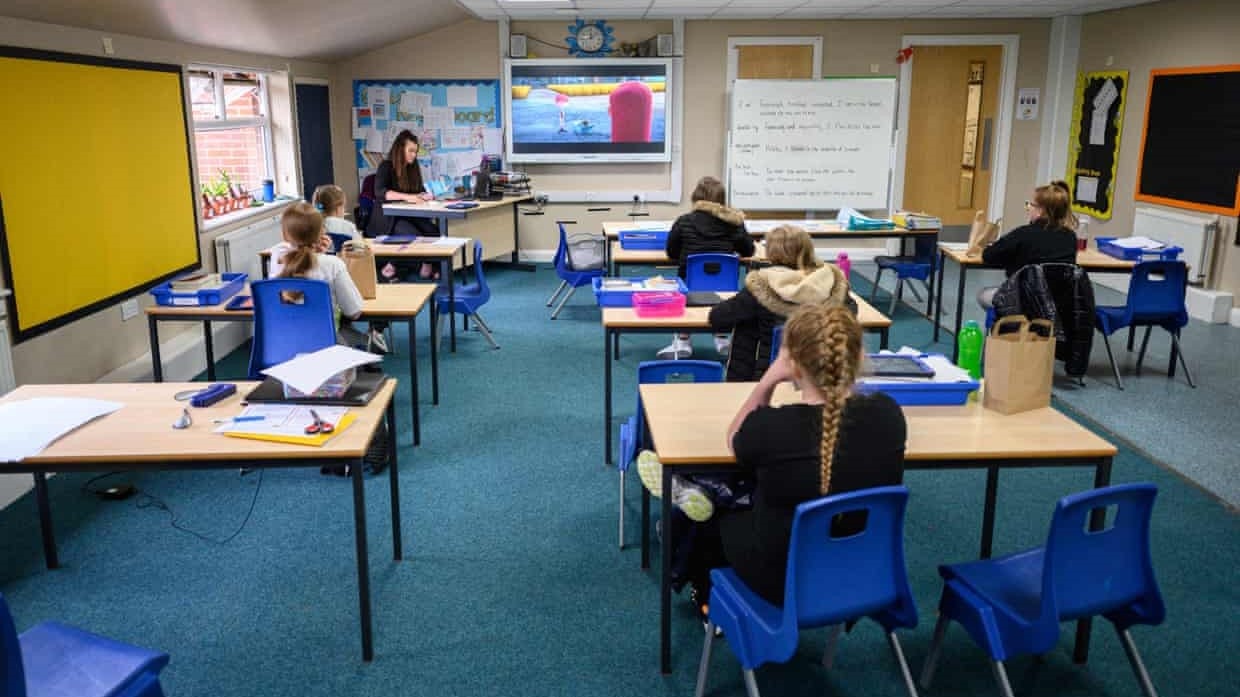
Starting September, the government has said it will be compulsory for all pupils in England to return to school after several months of disruption. New guidance has been published, offering advice on everything from choirs and classroom ventilation to Covid-19 testing kits and corridor management. These are the headlines.

Staggered journeys to school

The government wants schools to stagger the start and end of the day to keep groups of students apart and avoid congestion, with staggered lunch and break times to minimize contact. While some schools have been practicing this with limited numbers of pupils, it is likely to be significantly more complex when 1,500 teenagers return from their enforced break at the beginning of September.

Headteachers say transport to and from school will be one of the biggest challenges. While dedicated school buses can be managed to a certain degree, schools have no control when it comes to public transport. Pupils over the age of 11 must wear face masks, which must be safely removed at the school entrance, but the use of public transport should be kept to an absolute minimum. Ministers would like pupils to walk and cycle where possible, but that will be impossible for many.

Bigger protective bubbles

Rather than measuring social distance by the metre in schools, the new government guidance talks about minimising contact and using protective bubbles. Initially the maximum number of children in a bubble was 15; in primaries that has been expanded to 30 and in large secondaries a bubble may have to incorporate an entire year group made up of hundreds of pupils. The bubbles must be kept away from each other throughout the day, in different areas of the building, but staff can move between bubbles so long as they keep their distance.

The idea is to reduce transmission of the virus and that if a pupil tests positive, fewer people have to self-isolate. School leaders have their doubts about how well this might work in often cramped sites with little outdoor space. “The logistics of keeping apart many different ‘bubbles’ of children in a full school, including whole-year groups comprising hundreds of pupils, is mind boggling,” said Geoff Barton, the general secretary of the Association of School and College Leaders.

The new-look classroom

With the teacher at the front of class, and pupils sitting at well-spaced desks, all facing forward, classrooms may look rather old-fashioned to children and young people used to greater freedoms in school. The guidance says windows should be kept open where possible to maximise ventilation and suggests singing and music lessons might be held outside because of the heightened risk of infection. School-wide assemblies are banned and use of staff rooms should be “minimised”.

Some relaxation of the school curriculum

The government is keen to send out the message that it will be business as usual, with a return to a full timetable and broad curriculum. In reality, many children will need extensive help to catch up on lost learning and may need to focus on core subjects. Year 7 pupils starting at secondary school may need to recap their year 6 syllabus and some GCSE pupils may be encouraged to drop a subject so they can focus on maths and English. “We are aware that this may lead to concerns that the curriculum is being narrowed for these children,” Barton acknowledged, adding that it would only happen if it was in the best interests of the pupil.

The aim will be to return to the normal curriculum by the summer term in 2021 but child development and mental health experts have said the emphasis should be on wellbeing, friendships and play as children get back to school, rather than academic attainment. The government acknowledges that remote learning may continue to play a significant role in the case of local lockdowns and for individual pupils, but there remain concerns about access to computers and online resources among the most disadvantaged.

All exams to go-ahead

The government wants all tests and exams to go ahead in the next year, including the phonics screening check in year 1, key stage 1 and 2 tests in primary, and the year 4 multiplication tables check. The new reception baseline assessment, which was due to be introduced for four-year-olds starting school this September, has been postponed. GCSEs and A-levels will go ahead next summer, though they may be delayed for a few weeks to allow extra teaching time, and some content may be reduced. Unions say the changes being proposed are minimal and that the government’s expectations are “unrealistic” given the amount of learning time lost.

Updated behaviour policies

The government guidance warns schools to prepare for more bad behaviour and acknowledges that some pupils will need additional support. The main message, however, is that there must be consequences for poor behaviour, particularly for breaches of new hygiene and distancing rules within schools, and that exclusion can be used as a last resort. Campaigners working with children who have special educational needs and disabilities (Send) are concerned there will be spike in exclusions among pupils with Send, who struggle with school in the best of circumstances and may be significantly affected by lockdown.

Parents can be fined for non-attendance

The government has said it will be mandatory for pupils to return to school from September, with fines for non-attendance as a last resort. Headteachers have opposed this, saying many parents will continue to have genuine fears about health and safety and the school should work with them rather than penalise them for absences. In reality, although the government is insisting on all pupils back in school at the start of the next academic year, headteachers will be allowed to use their discretion over fines and many will no doubt be sympathetic.

Hygiene, hand-washing and a small number of Covid-19 testing kits for schools

The government guidance includes the now familiar regime of regular hand-washing, “catch-it-bin-it-kill-it” messages and regular cleaning of spaces and equipment. Each school will be given a small supply of home testing kits and in the event of a Covid-19 outbreak mobile testing units could be sent to administer tests to a class, year group or entire school if necessary. Where there are two or more confirmed cases in a two-week period, a larger number of pupils may have to self-isolate at home.


All content belongs to The Guardian

We do not claim any content to be our own.


Council Supports Personal Trainers With Free Park Use

in Croydon

The fees required for sports clubs, personal trainers, and businesses to run exercise sessions in parks are temporarily waived by Croydon Council, in light of Covid-19 government restrictions.

With groups limited to no more than five participants due to social distancing, the council is backing physical activity providers to resume their businesses in a safe and secure way.

Anybody wishing to use one of Croydon’s parks to run exercise sessions must still obtain a park user agreement. Park user agreements are issued to sports and physical activity clubs, personal trainers and businesses, permitting the use of park space to run organised activities which allows the council to regulate use and maintain safety.

Full information about the park user agreement and how to apply for one is on the council website.

Any sport and fitness providers looking to obtain a park user agreement will need to provide the details of the park in which activities will be held; proposed dates and times of sessions; include relevant documents (such as qualifications, first aid certificate); give proof of insurance; and complete risk assessments for activities.

They must also provide a Covid-19 risk assessment/ method statement which details an understanding of the government guidance:

  • Number of participants (maximum ratios of one coach/instructor in cluster groups of no more than five participants).
  • Maintain social distancing at all times including instructors and participants in cluster groups; clear separation of space between other cluster groups and park users.
  • Changeover time between back-to-back sport & fitness sessions.
  • Registers for Track & Trace purposes.
  • Hand sanitising, equipment cleaning and equipment sharing protocol.


“With classes limited to no more than five participants, we know that our sport and fitness providers have been hit hard by the coronavirus pandemic. By temporarily waiving this fee we are showing our support for this industry, whilst our thorough park user agreement will ensure that safety remains everybody’s top priority.”

Councillor Oliver Lewis, cabinet member for culture, leisure and sport


All content belongs to croydon.gov.uk 

We do not claim any content to be our own.

Council Applies To Renew Landlord Licensing Scheme

in Croydon

Croydon Council has for government approval to renew the borough’s landlord licensing scheme that makes sure privately-let properties meet key housing standards.

Over 48,500 properties are covered by the council’s current borough-wide scheme – launched in October 2015 to ensure private landlords meet a range of housing, environmental and safety standards.

It requires all private landlords to hold a Croydon property licence and to meet certain requirements, including landlord inspections every six months, safety measures such as fire alarms, and giving tenants a proper tenancy agreement.

Under the scheme the council has resolved thousands of incidents with landlords without needing further action, inspected over 13,000 properties, served over 1,000 enforcement notices, issued 75 prohibition orders, and fined or prosecuted over 40 landlords. Successful court cases include action against a couple who let a home without working smoke alarms to a family whose son later died after a fire.

Ahead of the current five-year scheme expiring on 30 September, Croydon Council carried out formal public consultation between December and March on three options for a renewed scheme. The option now submitted to government would see the scheme cover the whole borough, targeting antisocial behaviour in six wards in the south and poor housing conditions in 22 wards mainly in the north and centre of the borough.

Under legislation introduced since Croydon’s existing scheme came into force, final government permission is now needed for any new licensing scheme if it covers more than 20% of the private rented sector or 20% of the geographical area of a borough.

The standard cost for a five-year licence would remain at £750, with discounts available including a £350 fee for current licence holders. Under the existing scheme, over 80% of applicants paid a reduced fee. Under the proposed scheme, licences would continue to last five years. If there were concerns with a landlord, they would be issued a single-year licence and have twice-yearly inspections and an annual licence review.

The new scheme would include an improved support service for landlords and tenants, including a tenants’ welcome pack and template documents so it is easier to do inspections and safety checks.

Councillor Alison Butler, deputy leader and cabinet member for homes and Gateway services.


“Our landlord licensing scheme has made a positive difference to the lives of thousands of private tenants across the borough, and the proposals we’ve now submitted to government are about building on this crucial work for another five years.

“The importance of having a decent, safe and secure home has become even clearer since the pandemic lockdown, and it underlines why we need the government to approve our scheme so we can continue to raise living standards in Croydon.”

Councillor Alison Butler, deputy leader and cabinet member for homes and Gateway services


All content belongs to croydon.gov.uk 

We do not claim any content to be our own.


Face-to-face Support Resumes For Residents

in Croydon

Access Croydon council staff pre-booked appointments will now be offered to residents needing face-to-face support from Monday 27 July.

While the vast majority of resident queries will still be dealt with virtually and online to limit the ongoing Covid-19 infection risk, the council is starting to hold a limited number of pre-booked appointments for those who need them.

Since Access Croydon closed in March for lockdown, the council has continued to give advice and support for local residents by phone, email and by directing them to the council website.

Due to Covid-19 the council remains unable to take drop-in visits. Socially-distanced face-to-face help for people with emergencies is available, which has been the case since the beginning of lockdown.

If you have a query, in the first instance call 020 8726 6000 or visit the council website.

Apart from staff helping residents who have been given pre-booked appointments, Access Croydon will remain closed to the public because of Covid-19, with all other queries dealt with by phone or online.

Residents can access most council services, from help with benefits to applying for a parking permit, online via the council website without needing an appointment in person.

If you have an appointment please arrive on time, talk to staff through the intercom before entering, wear a face covering, use hand sanitiser provided and bring no one else unless necessary.

To limit infection risk, the public phones, computers, toilets (except the disabled toilet) and baby change, and the children’s play area remain closed.


All content belongs to croydon.gov.uk 

We do not claim any content to be our own.

Top Skills to Be Learned in 2020

in Uncategorized
Woman writing on a tablet while using her laptop.

Tech skills are currently in demand in the workforce. This demand is tremendously increasing due to society’s transition to digital marketing, e-commerce, and more. 

That’s according to Udemy’s 2020 Workplace Learning Trends Report, which indicates workers across some of the largest industries are heavily focused on learning data science and technology skills.

Here are the top five trending skills for software engineers, marketers, sales professionals, and finance professionals:

Software engineering

  1. Python: Programming language used in software development, infrastructure management, and data analysis
  2. React: JavaScript library for building user interfaces
  3. Docker: Open-source platform used to create software packages
  4. Java: Programming language and computing platform
  5. JavaScript: Programming language primarily used for interactive web design

Marketing

  1. Digital marketing: Advertising products or services through search engines, websites, social media, and mobile apps
  2. Python: Programming language used in software development, infrastructure management, and data analysis
  3. Web development: Writing markup and coding to build a website or application
  4. SQL: Programming language that allows users to manage databases
  5. Google Ads: Online advertising platform developed by Google

Sales

  1. Sales skills: Communication skills such as negotiation or storytelling used to facilitate a business transaction
  2. Excel: Spreadsheet program developed by Microsoft used for calculations, graphs and statistical analysis
  3. Leadership: Providing guidance within an organization
  4. Web development: Writing markup and coding to build a website or application
  5. Public speaking: Communicating information through a presentation

Finance

  1. Excel: Spreadsheet program developed by Microsoft used for calculations, graphs and statistical analysis
  2. SQL: Programming language that allows users to manage databases
  3. Financial analysis: Using company financial data to assess performance and make recommendations
  4. Tableau: Data visualization tool
  5. Leadership: Providing guidance within an organization

Planning to learn these skills? Why not. The Internet is a resource of endless information and free courses that can help you acquire these skills.

Found this article helpful? Don’t forget to share!

How to Stay Healthy During the Quarantine

in health
Woman cutting fruits in the kitchen.

The COVID-19 pandemic has posed challenges to everyone around the globe. From physical to mental up to emotional aspects of an individual is greatly affected by this pandemic.

Maintaining good health is very important. Here are some strategies for keeping yourself physically and mentally healthy in quarantine so you can keep fighting the good fight.

1. Don’t overindulge in unhealthy eating habits. Wine, candy, chips, soda. All are fine in moderation. When humans are under stress (including isolation) we go into self-soothing strategies. Self-soothing strategies are ways that we calm ourselves down when under stress. Many of us self-soothe with alcohol or junk food. Though alcohol or junk food may help your mental health in the short term, it will affect your physical health, and therefore your body’s resistance to infection. Limit drinking and consumption of sugary or processed foods.

2. Schedule time for healthy self-soothing. When working from home it can be hard to see the lines between work and downtime (in both directions). Make sure work time is used for work and downtime is kept sacred. Downtime is essential for self-soothing. Epsom salt baths, listening to music, doing yoga, exercise, and meditation are all healthy self-soothing options.

3. Relieving stress in healthy ways is key to ensuring your stress does not exceed your body’s ability to recover from it. This will allow stressors on your body to remain in the hormetic zone (the amount of stress that’s healthy rather than harmful).

4. Manage your environment. Designate an area to work if feasible. Play certain music only when you’re working, or wear “work clothes” while you’re doing work and change clothes when you are transitioning to downtime. You can change your environment with lighting, music, and clothing. Change your state by changing your surroundings. Be deliberate about creating a “working environment” and a “downtime environment.”

5. Maintain your sleep routine. Whether a healthcare worker or a 9-5er who suddenly has very little structure, sleep is going to be essential in keeping you healthy in the face of COVID-19. Make sure you’re practicing good sleep hygiene, keeping your sleeping environment cool, dark, and quiet. Limit blue spectrum light before bed with special glasses or programs like Nightshift on Macs, iPhones, and iPads, and f.lux on PCs and smartphones.

6. Get sun. Vitamin D is important in the immune response. Getting sun will increase your vitamin D reserves. Opening shades and windows, sitting in sunny areas of your apartment, and even getting outside when social distancing is possible (maintaining 6+ feet between yourself and others).

7. Get exercise. Even if it’s raining or too crowded outside to practice social distancing, an exercise in your apartment. Wall push-ups, squats, guard circles, Supermans, and etc. are effective exercises with limited space. Switch between upper and lower body exercises to get your heart pumping and add a cardio component.

8. Enjoy your in-home “hydrotherapy machine.” Use your shower or bath for the therapeutic and toxin-flushing impact it can have. Hot showers/baths ease muscle tension relieving stress.

9. Reach out for emotional support. Schedule virtual happy hours, brunches, and hangouts with friends.


Stay healthy out there. Not only for yourself, but for your neighbors and loved ones.

Don’t forget to share this!

Tips for Local Businesses

in Croydon

Local businesses are starting to grow in our communities. From food businesses to dry goods, many people are gaining interest in this sector. 

As a member of the community, we need to help these local businesses by patronizing them.

In order for the community to patronize and promote local businesses, here are some tips that you can do to scale up your local business:

1. Give an extra reason to shop with you

This can be as simple as giving customers a small discount or a small free gift with their purchase, or as far-reaching as donating part of the proceeds of the day’s sales to a worthy local cause. Give customers a reason to feel extra good that they shopped with you, especially if you can demonstrate how their purchase supports their own community. 

2. Give local media something to report

Creativity is your best asset in deciding how to make your place of business a top destination, worthy of mentions in the local news. Live music? A treasure hunt? The best store window in town? Reach out to reporters if you’re doing something extra special to build up publicity.

Also, you can reach out to local news publications or news and events websites in your area for you to get featured. 

This way, your business will be promoted to gain attention in your community.

Promote your local business today!

3. Give a reason to come back year-round

Turn a shopping moment into a teaching moment. Print up some flyers and pass them out to customers to teach them how local purchasing increases local wealth, health, and security. Take a minute or two to talk with customers who express interest. Sometimes, all it takes is a little education and kindness to shift habits. 

Found this helpful? Don’t forget to share!

1 3 4 5 6 7 13
Go to Top