Author

Jay Foster - page 4

Jay Foster has 123 articles published.

Coronavirus vaccine: UK signs deals for 90 million virus vaccine doses
in health

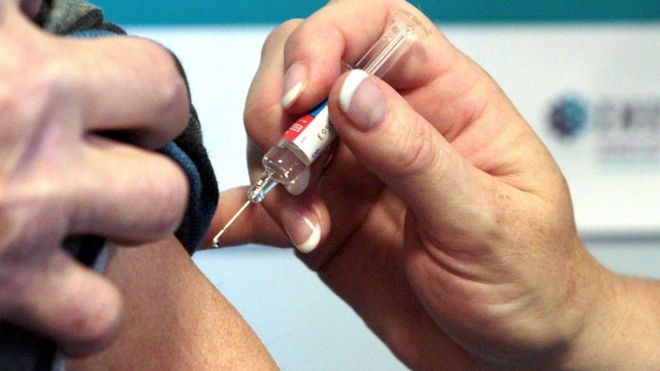
For a further 90 million doses of coronavirus vaccine, the UK government has signed deals.

The vaccines are being developed by the Belgian pharmaceutical company Janssen and the US biotech company Novavax.

It means the UK has placed orders for six experimental vaccines, taking its potential stockpile to 340 million doses.

In theory, there should be enough for everyone in the UK to get five doses. Most of the vaccines require only two.

With most vaccine trials ending in failure, the government is effectively hedging its bets, hoping that at least one of the vaccines it has purchased proves safe and effective.

The price being paid has not been revealed.

Kate Bingham, chair of the UK government Vaccine Taskforce, told the BBC: “We don’t know if any of these vaccine formats that we’ve acquired will actually work. There are no licensed vaccines for any human coronavirus.”

She added it was a “priority” to ensure the UK has “sufficient vaccine” for groups “who are most at risk from coronavirus infection”.

Business Secretary Alok Sharma said: “The government’s strategy to build a portfolio of promising vaccine candidates will ensure we have the best chance possible of finding one that works.

“Today’s agreements will not only benefit people in the UK but will ensure fair and equitable access of a vaccine around the world, potentially protecting hundreds of millions of lives.”

The government has now purchased experimental coronavirus vaccines that have been developed using four different scientific approaches:

  • Adenovirus vaccines: 100 million doses Oxford University/AstraZeneca; 30 million doses Janssen
  • mRNA vaccines: 30 million doses BioNTech/Pfizer
  • Inactivated whole virus vaccines: 60 million doses Valneva
  • Protein adjuvant vaccines: 60 million doses GSK/Sanofi; 60 million doses Novavax

It takes Britain’s potential stockpile to a total of 340 million doses – one of the biggest in the world.

The Oxford and BioNTech/Pfizer vaccines are in advanced, phase three clinical trials, with tens of thousands of volunteers recruited.

It is possible that some indication on how effective they are could come in late autumn, but that is not guaranteed.

The government says if the Janssen and Novavax vaccine trials go well, the first deliveries could take place in mid-2021.

The UK has also agreed to co-fund a clinical study of the Janssen vaccine.

By the end of the year, there could be at least half a dozen different coronavirus vaccines in clinical trials in the UK – and members of the public are being encouraged to register their interest online, because without medical volunteers we will not know if any of the vaccines actually works.


All content belongs to bbc.com

We do not claim any content to be our own.

 

Shortlist success in apprenticeship awards

in Croydon

In the prestigious London Borough Apprenticeship Awards 2020, Croydon Council has been shortlisted in a trio of categories.

Out of the five award categories – which recognise the contribution of London’s apprentices to their communities and the innovative work creating new apprenticeships – the borough is featured in three of them.

Nazifa Chowdhury is in the running for Best Progression by an Apprentice, David Osborne for The Andy Scott Award for Best Manager or Mentor and the borough has been shortlisted for Best Work with the Supply Chain and Local Businesses to Create New Apprenticeships.

Twenty-year-old Nazifa is currently working as a full-time apprentice in the council’s financial department.

In her nomination the council wrote: “Nazifa came to the council as a quiet 17-year-old and has developed into a confident and capable young officer. She is a phenomenal ambassador for apprenticeships and has delivered extraordinary presentations to cabinet members, economic summit and the Local Government Association. She has also encouraged new apprentices to stay focused and work hard.”

Nazifa said: “I am excited for myself and for Croydon because for it to be shortlisted in three of the categories is a massive accomplishment. Our council is really good at apprenticeships and the best thing about doing them is that you gain experience as well as a qualification. I would like to say a big ‘thank you’ for hiring me and supporting me in my development. By the end of my apprenticeship I hope to be a fully-qualified accountant.”

The council’s apprentices’ scheme is part of the Choose Your Future campaign which encourages young people to make positive life choices. Since it started the call to action it has engaged with thousands of young people and been linked to a 17 per cent drop in knife crime. Last year it won the LGC Awards’ communications campaign of the year category at a ceremony celebrating the best initiatives in local government.

David Osborne is the council’s cemetery horticultural manager who oversees a team looking after all the gardens and maintenance of the borough’s cemeteries. He is currently managing a young apprentice and helping him complete his coursework with a philosophy of ‘Work-Enjoy-Develop!’

He said: “It’s nice to be recognised because an apprenticeship is such a good idea for young people. With apprentices you’ve got to get them to enjoy the profession because if they enjoy it they’ll do well. And you also want people to become responsible so they can look around and see for themselves what needs doing. Croydon is a good employer for apprentices because it offers the full working wage.

“I am full of praise for both Nazifa and David for their outstanding work which has benefitted others over the past year. I am also delighted that the council, in partnership with training providers and employers across the borough, has been shortlisted in recognition of creating new apprenticeships. This was achieved through our innovative 100 in 100 campaign, part of our award-winning Choose Your Future Campaign, and resulted in 120 new apprenticeship opportunities being created involving 60 employers. Our shortlist success proves that Croydon is taking the lead in providing more and more opportunities for its residents.”


Councillor Manju Shahul-Hameed, cabinet member for economy and jobs

Councillor Georgia Gould, deputy chair of London Councils and executive member for skills and employment, said: “The awards highlight the diversity of apprentices across London and shines a spotlight on those individuals who have excelled in their chosen field of work and in giving back to London’s communities. It is a huge privilege to recognise the hard work and impressive achievements of the apprentices and those that support them.”

An awards ceremony will be held at Painters’ Hall in central London on Thursday, 3 September.

If you are interested in starting an apprenticeship then visit croydon.gov.uk/jobsatcroydon/apprenticeship


All content belongs to croydon.gov.uk

We do not claim any content to be our own.

 

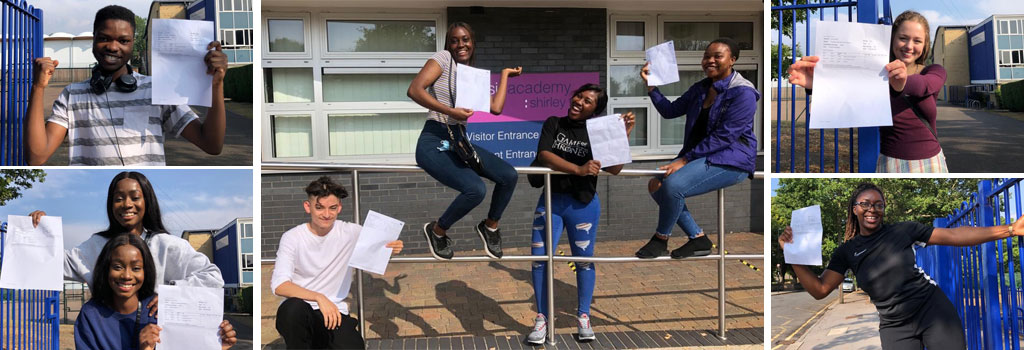
Croydon marks A-level successes despite Covid-19

in Croydon

Croydon’s A-level student’s early indications show they have done well in external assessments announced Thursday as replacements for cancelled summer examinations.

As a result of the nationwide Covid-19 lockdown in March, all GCSE and A-level examinations due to be sat in summer 2020 were cancelled. On Thursday, A-level students received alternative grades based on both their own school’s analysis of past performance and external independent assessments.

With most schools’ results already in for the borough, Croydon schools have achieved a preliminary pass rate of 98.5%, which is above the borough’s 2019 results (95.72%), its 2018 results (96.13%) and anticipated national average of 98.3%.

Croydon schools’ A*-A grades increased by 4% to 23%, while the percentage of A*- B grades also increased in Croydon by 7% to 50%. The overall A*- C rate has increased in Croydon by 9% to 78%.

Any students wanting to appeal their grades have 15 days to do so. For council assistance, contact educationenquiries@croydon.gov.uk with “A-levels – urgent” or similar in the email subject box. This account reaches Shelley Davies, Mike McKeaveney, Denise Bushay, Sarah Bailey and Julie Ralphs.

Two A grades in Computer Science and Maths, and a B in Physics, means that Archbishop Tenison’s C of E student Winston McCarthy will be studying Computer Science and Artificial Intelligence at Southampton University from October. The 18-year-old from South Croydon said: “I’m pleasantly surprised – initially I thought the grades would be lower by quite a bit, but it’s better than I thought it would be.”

Archbishop Tenison’s C of E headteacher Richard Parrish said: “We are pleased that for most of them it has worked out well. This is a cohort of students that was looking forward to doing their exams and showing what they can do. We have done our best to make this work for them, and in most cases we are delighted that they are able to progress as hoped.”

At Oasis Academy Shirley, around 90% of their Year 13 students have secured a place at university compared to 92% of a smaller year group last year. University destinations include the academy’s first-ever Cambridge entry, as well as Manchester, Bristol and the London School of Economics.

Ian Walsh, Head of Sixth Form, said: “We’re pleased; it is a decent set of results overall. I was very nervous about this results day for obvious reasons, but it’s been fine – lots of the universities have been flexible like they said they would be.”

Oasis Academy Shirley student Juan Lucena, from East Croydon, got A* grades in Maths and Physics, an A in Further Maths and a B in Chemistry. The 18-year-old will now study aerospace engineering at Bristol University. He said: “I was very nervous and a bit scared, but now it’s fine; I can relax and look forward to Bristol. I’m really excited and want to start studying now!”

“Because of Covid-19 it’s been a difficult and disrupted year for all Croydon pupils – but especially those who were meant to take exams but couldn’t.

“Results day is tough enough for students without the added uncertainty and, in some cases, the disappointment of this year’s grades system that takes their fate out of their hands.

“In spite of this, Croydon pupils can all be proud of their resilience and achievements, and we are incredibly proud of them. Whatever their planned next steps are, their schools and the council are there to help, and that includes supporting students to access the appeals process if they didn’t get the grades they expected. We are also arranging a series of events so students get any extra support they need to work towards their long-term aspirations.”

Councillor Alisa Flemming, cabinet member for children, young people and learning

The council-run events are open to young people aged 16-18 who either live in the borough or attend a Croydon school. They include a roadshow in North End from 2-5pm on Thursday 20 August. For more information, call 0208 726 7485 or email post16@croydon.gov.uk

All content belongs to croydon.gov.uk

We do not claim any content to be our own.

UK weather: Coastguard issues new warning after busiest day in four years

in Uncategorized

After recording its highest number of call-outs in a single day for more than four years, the UK’s coastguard has issued a new warning urging people to be careful in the sea.

Its teams dealt with 340 incidents and rescued 146 people on Saturday.

Saturday was the second day of a mini-heatwave for parts of the UK, with temperatures hitting 34.5C (94.1F).

A woman in her 30s died on Sunday after getting into difficulties in the sea off the coast in Waxham, Norfolk.

She was recovered from the water but was pronounced dead on arrival at hospital, said Norfolk Police, adding that the death was being treated as unexplained but not suspicious.

The latest figures from the coastguard came just over a week after the coastguard reported its previous record of 329 incidents.

HM Coastguard’s head of coastguard operations, Richard Hackwell, said there had been “a big rise” in incidents this weekend “as more people visit coastal areas and head to the beach”.

“We understand that people want to have fun at the coast and enjoy the heatwave but we urge everyone to respect the sea and take responsibility in helping to ensure the safety of themselves, friends and family,” he said.

Separately, the RNLI called for people to wear life jackets if going out on the sea, after a number of kayakers needed rescuing off the Devon coast on Sunday.

The warnings came on another sweltering day for many Britons on Sunday, with a high of 34C recorded in East Sussex, according to BBC Weather.

Earlier, it reached 24.3C in Scotland (Achnagart), 23C in Wales (Hawarden) and 21.6C in Northern Ireland (Ballywatticock), BBC Weather said.

There will also be little relief from the warm weather overnight, particularly in south-east England, where some face a so-called tropical night – when temperatures stay above 20C.

Crowds packed out beaches along the coast for the third day in a row on Sunday as the hot weather continued.

Thanet District Council warned four of its beaches in Kent – Margate Main Sands, Viking Bay, Joss Bay and Ramsgate Main Sands – were “extremely busy”, with high tide likely to make social distancing difficult.

And Dorset Council urged people to avoid Lulworth and Durdle Door by midday due to large numbers in the area.

Some seafront car parks in Dorset were full by mid-afternoon, and Bournemouth, Christchurch and Poole Council warned beachgoers – via a new mobile app – of congestion on much of its 24 beaches.

Meanwhile, a woman has died following a collision between a water bike and a boat off Anglesey, in Wales.

‘Significant’ increase

The coastguard co-ordinated search and rescue responses to a wide range of incidents on Saturday, including people being cut off by the tide and children swept out to sea on inflatables.

In total, the service responded to 186 emergency 999 calls, rescued 146 people and assisted a further 371.

Saturday’s incident count represents a “significant” 145% increase compared to the average number of call-outs recorded throughout August 2019, the coastguard said in a statement.

Mr Hackwell stressed that beachgoers should “check and double check tide times as even the most experienced swimmer or keen watersports enthusiast can get caught out by currents and tides”.

And he encouraged people to plan their days out, “always exercise caution” and to make sure they have a way of contacting the coastguard if they get into trouble.

The hot weather is likely to continue into next week, with humid nights, according to BBC Weather.

Forecasters have predicted “oppressive” highs of 34C in the south-east during the day on Monday, with sunny spells expected elsewhere in the UK.

However, there is a growing risk of thunderstorms. There is a chance of sharp showers that could turn thundery for some areas in western England and Wales on Monday.

Yellow thunderstorm warnings have been issued for all parts of the UK for Monday through to Thursday, with the Met Office stating “not everywhere will see them, but where they do occur they could be significant and disruptive”.

Large parts of England and Wales have been warned there may be torrential rain, large hail, frequent lightning and strong gusty winds.

Downpours could see rainfall of 20-30mm in an hour, with some locations potentially receiving 40-60mm in three hours. These would be fairly isolated instances, according to the Met Office.

Friday saw the hottest August day in 17 years, with the mercury hitting 36.4C at London’s Heathrow Airport and Kew Gardens.

Last week, the Met Office warned that climate change driven by industrial society is having an increasing impact on the UK’s weather.

Its annual UK report confirmed that 2019 was the 12th warmest year in a series from 1884, and described the year as remarkable for high temperature records in the UK.


All content belongs to bbc.com

We do not claim any content to be our own.

London house prices: Zoopla’s property heatmap that shows you where London’s most expensive areas are

in Housing

In London, the traditional wisdom on house prices is that they are much higher than the rest of the country.

And that holds true, but the other half of that statement would be that to save money or to get more bang for your buck you should move further out of the city.

Often cited using the zones on the Tube map, estate agents may tell you to focus on zones 5 and 6 rather than the Zone 2 station you would much rather commute from.

But property listings website Zoopla has uncovered that things may not be so simple.

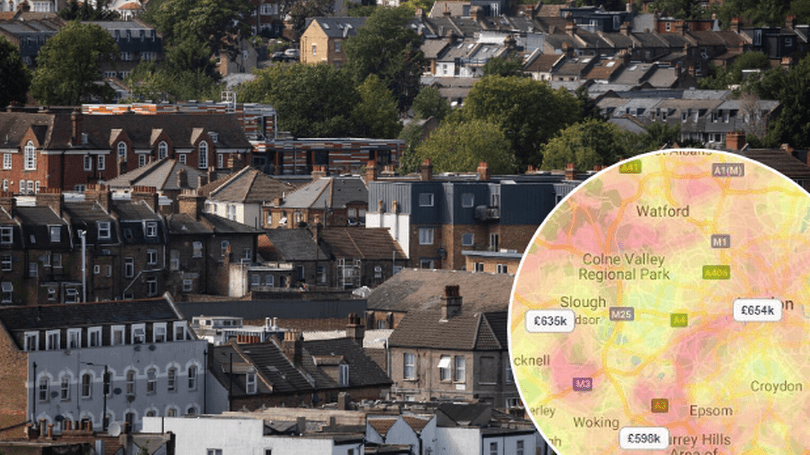
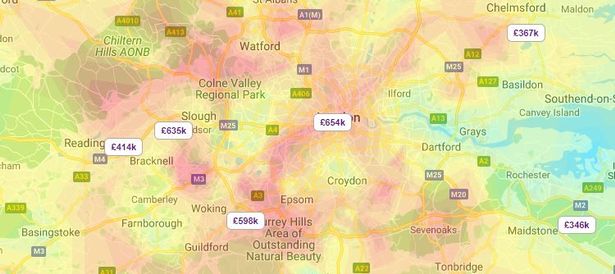
By developing a heatmap which shows how house prices vary across the capital, an interesting pattern emerges.

While Central London is indeed an expensive place to look to buy a home, perhaps now the preserve of investors, oligarchs and multi-millionaires, other areas of London are also red-hot when it comes to property prices.

Looking at the map from above, you can clearly make out an X pattern, with the centre of the X at the centre of London.

In diagonal directions to the North East, South East, South West and North West, there are corridors of high property prices.

In the North East, clusters of high-value homes appear around Stratford’s desirable East Village area, Wanstead, Snaresbrook and Woodford before heading into the celeb-favoured areas of Essex like Buckhurst Hill and Chigwell, which are still an easy commute from London on the London Underground’s Central line.

Heading to the South Eastern corner, Blackheath in Greenwich, areas of Beckenham, Chislehurst and Bexley and the suburb of Locksbottom in Bromley in particular light the map up in red.

In the South West the ever-desirable areas of Barnes, Roehampton, Richmond, Wimbledon, areas of Kingston and then parts of Surrey like Esher, Oxshott and Weybridge, all easily commutable y train to London, formed a high-value property corridor.

Last but not least, the North Western leg of the X-shape starts in Kensington and radiates out through Marylebone and St John’s Wood to Hampstead, Southgate, Totteridge and Arkley in Barnet as well as through Stanmore, Pinner and Northwood.

The map calculates the “Zed-Index” of properties, average house prices created by Zoopla using their statistics and data on a range of factors.

The heat-map’s spectrum is from blue, which are the areas with lowest property values, to red, areas with the highest values.

London’s only significant section of blue housing or low property prices is now a channel radiating eastwards from around Barking along both sides of the River Thames, out into Essex areas like Grays and Gravesend.

You can explore Zoopla’s property price heatmap here.


All content belongs to MyLondon

We do not claim any content to be our own.

Croydon launches 24-hour helpline with Stop Hate UK

in Croydon

National Charity Stop Hate UK and Croydon have joined forces to introduce a new 24-hour helpline dedicated to supporting residents affected by hate crime.

Hate crimes are when people are targeted because of their disability, gender identity, race, sexual orientation, religion, or any other form of their personal identity. Last year 24,000 Croydon residents signed Say No To Hate pledges as part of the council’s zero tolerance campaign.

Launched this week, the new service will give victims and witnesses in Croydon a safe and confidential space to talk about their experiences with trained staff and volunteers able to provide a non-judgemental listening ear, as well as advice on appropriate action and accessing further help. The helpline will support those affected by both hate crimes and hate incidents.

The Stop Hate helpline is open 24 hours a day, every day of the year on 0800 138 1625. The helpline is also available by text message on 07717 989 025 and by email to talk@stophateuk.org.

Deaf British Sign Language (BSL) users can report using the Interpreter Now app by following the link on www.stophateuk.org. Victims and witnesses can also chat on the web or fill in an online form by visiting www.stophateuk.org/talk.

Residents can also contact the Stop Hate UK helpline anonymously if they prefer. However, if someone does opt to give their personal details to Stop Hate UK, staff will request consent before passing on information to the police and council. Reporting cases to the police will be encouraged to help ensure that those affected by hate, in any form, are signposted to access the correct support. Where necessary, staff will assess potential dangers and vulnerability of the callers and be able to make safeguarding referrals.


“There is no place for hate crime in Croydon and tackling all forms of hate crime is a priority in our Community Safety Strategy. We know that too many people tolerate hate crime as a reality of life and don’t always report their experiences. We really welcome the availability of the Stop Hate UK Helpline for Croydon residents and encourage anyone experiencing any form of abuse because of who they are to come forward and seek support.”

Councillor Hamida Ali, cabinet member for safer Croydon and communities


Rose Simkins, Chief Executive of Stop Hate UK, said:

“We are able to support people who feel they have nowhere else to turn. Contact with our helpline, or other reporting channels, might be the first time an individual has talked to someone about the things they are experiencing. Other people may have tried to get help but find they are not satisfied with the response they received. No one should have to suffer hate crime in silence. Sadly the occurrence of hate crime has increased nationally but, working together with the council, statutory and community bodies, we can help to make a difference in Croydon.”


All content belongs to croydon.gov.uk

We do not claim any content to be our own.


Council Fund Helps To Boost Croydon’s Culture Groups

in Croydon

Croydon’s Cultural Relief Fund has benefited almost 40 creative organizations so they can continue their work despite the impact of Covid-19.

Croydon Council launched the £135,000 Cultural Relief Fund in April in response to the Covid-19 pandemic, offering support for groups who were not eligible for other schemes, or could not deliver projects without this critical funding.

The funding was allocated to 38 organisations over three rounds, and it has provided help with programming and emergency funding to cover administrative costs.

Grants ranged from £1,500 to £7,500, with world-class Croydon-based theatre organisations such as Talawa Theatre Company and award-winning Savvy Theatre Company able to move productions online and share their stories with a wider audience. This autumn, Talawa will launch Tales from the Front Line, which uses interviews from Black key and frontline workers to explore the Covid-19 crisis and its impact on the most affected communities.

SAVVY’s Mixed Bean Season has been delivered online since the start of lockdown, creating an ambitious, inclusive summer programme of productions after their theatre space at Fairfield Halls temporarily closed due to the Covid-19 crisis.

As a direct result of the Croydon Cultural Relief Fund, Birdgang – a leading UK creative company – managed to keep their base at Stanley Halls. They were commissioned by BBC Arts and Arts Council England to produce a dance film under lockdown conditions at the Halls. The piece, Flying Home, has been available on BBC iPlayer since Wednesday 8 July and brings cutting-edge choreography to the nation’s screens as part of BBC Arts’ Culture in Quarantine initiative.

Kendra Horsburgh, Managing Director of Birdgang Ltd, said: “Thanks to the Culture Relief Funding we are able to keep our home at Stanley Halls and continue being able to create output and house our 58 artists for training, and/or just moral support and mentorship during this time. Although we have not been physically there, we were able to shoot our BBC commission film there – under Covid-19 conditions of course.”

Councillor Oliver Lewis, cabinet member for culture, leisure and sport

“We cherish Croydon’s vibrant cultural community, which is why the council is working to ensure the sector can continue to thrive. Many of these businesses could easily have fallen through the cracks, as they were ineligible for many of the larger government support schemes available at the time.

“By stepping up and offering this funding, we have been able ensure that our borough’s independent artists and freelancers are not forgotten.”

Croydon’s Cultural Relief Fund included council funding diverted from the Cultural Partnership and Youth Arts Funds, both of which are now suspended, and Greater London Authority (GLA) funding, awarded to Croydon as part of its Creative Enterprise Zone (CEZ) grant.

A complete list of organisations that have received council funding can be found on our website at: www.croydon.gov.uk/community/advice/tsfunding/funding/croydon-culture-relief-fund


All content belongs to croydon.gov.uk

We do not claim any content to be our own.

Council Expands Scheme To Boost Walking And Cycling

in Croydon

This week, more temporary measures to encourage walking and cycling on Croydon residential streets and improve the local environment are due to come into force.

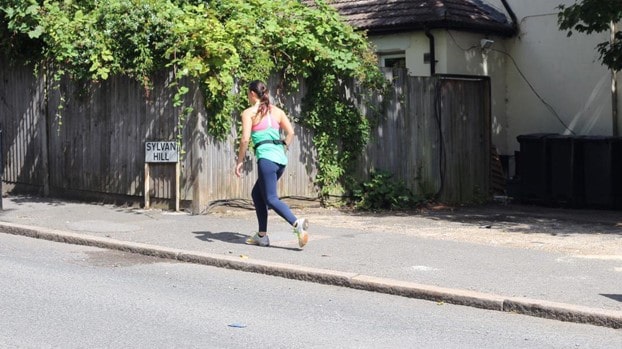
From next Monday, Croydon Council will use planters and signs to transform three more local streets into spaces where people can enjoy socially-distanced exercise and travel while maintaining access for residents, visitors, cyclists and pedestrians. The measures will involve temporarily turning the streets into cul-de-sacs for through vehicles with signs on alternative routes available.

This latest initiative is part of the council’s Streetspace scheme, which is funded by Transport for London and encourages more people to exercise by walking and cycling and cuts pollution levels as the borough’s Covid-19 recovery continues.

The new schemes being introduced from Monday 3 August are in Upper Norwood – Sylvan Hill, Stambourne Way and Fox Hill – bringing the borough’s total so far to 16.

Ahead of these changes, the council has informed around 1,500 residents, community groups, local representatives and emergency services, as well as installed formal road signs. The council has also informed Google so these measures show up on the latest version of drivers’ satellite navigation systems.

The initiative, put in place under a Temporary Traffic Regulation Order, will be reviewed in the autumn.

The closure points – and alternative access routes – for each of the affected new streets are:

  • Sylvan Hill: closure around halfway along Sylvan Hill. Local access will be maintained via both Church Road and Auckland Road ends of Sylvan Hill.
  • Stambourne Way: closure at the junction of Stambourne Way and Auckland Road. Local access will be maintained via the Church Road end of Stambourne Way.
  • Fox Hill: closure at the junction between Fox Hill and Braybrooke Gardens. Local access will maintained via the Church Road end of Fox Hill.

Similar schemes already put in place by the council to encourage socially-distanced active travel during Covid-19 include closures on Lancaster Road, Warminster Road and Woodvale Avenue to cut rat-running and keep local access in South Norwood; and a bus gate at the junction of Auckland Road and Cypress Road allowing the number 410 and cyclists continued access while barring cars.

For more information, visit the council website.

“In lockdown we saw a dramatic drop in traffic and pollution levels across Croydon, and these low-traffic schemes are about seizing the initiative to make our residential streets safer and more attractive to walkers, cyclists and residents alike.

“We have come up with these temporary measures because they make more of our roads attractive spaces for people to walk and cycle in, give everyone a safer and healthier local environment and they continue to allow traffic to get from A to B. If these latest schemes prove successful, we will consult the public to ask if they should become permanent.”

Councillor Stuart King, cabinet lead for transport and the environment


All content belongs to croydon.gov.uk 

We do not claim any content to be our own.


The brand New Uber Service That’s An Alternative To Using The London Underground

in Uncategorized

The number of people using the London Underground has dropped significantly during the lockdown. 

Londoners and commuters from outside the capital have heeded the warning that you should only use it for necessary journeys to prevent the spread of coronavirus.

But many of us have not missed using the Tube – so what if there was another way to get around the capital that’s a lot less hot, sweaty and busy?

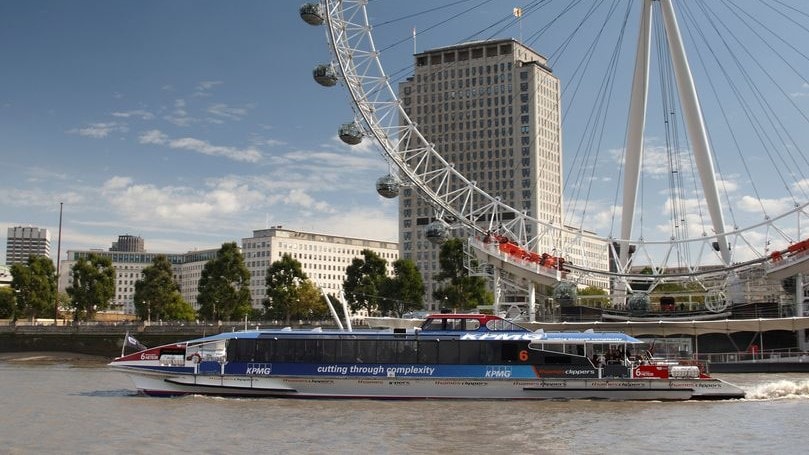
Uber has joined up with Thames Clippers for the launch of its new service, Uber Boat.

The service, which commences in London today (Monday, August 3), will allow users to purchase tickets for Thames Clippers boats in advance through the Uber app and then use QR technology to board.

The payment will be processed using Uber account details.

Passengers will be able to use the service across a fleet of 20 boats on the River Thames, with departures from 23 piers across London.

Thames Clippers’ users can still purchase tickets via the existing methods, including touching in and out with contactless or Oyster and via its own ticketing app.

More than 4.3 million people use the River Thames for commuting and leisure trips each year on the Thames Clippers network, the company said.

Jamie Heywood, Uber’s regional general manager for northern and eastern Europe, said the Uber Boat service is a crucial instrument in helping commuters return to work safely.

He said: “As Londoners begin to head back to work and move safely across the city, they will now be able to book travel on both the river and road through the Uber app.

“We must ensure that everyone does not return to their cars in response to the crisis, so our vision is to end private car ownership in favour of shared, electric vehicles, as well as making greater use of the river network for urban mobility.”

Uber Boat is another example of the company’s attempts to expand its services beyond road travel, following the 2017 announcement of its grand plans to introduce networks of flying taxis under the name Uber Air.

Uber has previously had a tough time making inroads in London, primarily due to repeated licensing issues.

The firm first had their London private hire operator’s licence revoked by Transport for London (TfL) in 2017 due to safety concerns.

Uber was eventually granted a 15-month licence following an appeal, however TfL refused the ride-sharing firm’s application for another new licence late last year after at least 14,000 trips were made with drivers who were not the ones shown on the app.

An appeal against the decision is still ongoing.


All content belongs to MyLondon

We do not claim any content to be our own.


Get Covid-19 Aware To Help Keep Croydon Safe

in Croydon

Keep Croydon Safe campaign launched on July 29 (Wednesday), urged Croydon residents to know how to get tested for coronavirus to protect themselves and their loved ones.

Launched as part of a new London-wide drive to address low awareness of Covid-19 testing and contact tracing across the capital, Croydon Council is urging people in the borough to get aware of how to access the NHS Test and Trace service if they are showing Covid-19 symptoms.

The borough’s Keep Croydon Safe call comes as part of the Keep London Safe campaign, which is led by London Councils in partnership with all 33 London councils, and supported by Public Health England, the NHS, the Mayor of London and the Greater London Authority (GLA).

The campaign comes after a YouGov poll for the GLA in June showed 46% of Londoners do not know how to get a Covid-19 test and 35% know little or nothing about NHS Test and Trace.

If you or anyone you know is showing symptoms – such as a fever, a continuous cough, or loss of smell or taste – you should immediately self-isolate for seven days and get a coronavirus test by calling 119 or visiting nhs.uk/coronavirus

The short and painless test involves taking a cotton bud sample from your mouth and nose, and you usually get results within 48 hours. Members of your household also need to self-isolate at home for 14 days from when your symptoms first showed.

If the test result is negative, your household can come out of self-isolation. If the result is positive, you and your household must complete the self-isolation – and you should receive a text or email from the NHS asking for details of the people you have been in close, recent contact with – and places you have visited – to protect those most at risk. No-one contacted will be told your identity.

“Coronavirus has not gone away, and here in Croydon keeping our residents safe from this remains a top council priority.

“A key part of limiting this infection risk is for everyone to do the right thing by continuing good hygiene and social distancing measures to protect themselves, their families and friends. This includes regularly washing hands, keeping apart when out and about and wearing a mask on public transport and in shops, which is now the law.

“But many people in Croydon are still unclear about what they need to do around testing, which is why I am proud to back this vital Keep Croydon Safe drive and the wider London campaign so everyone gets a mask and, if they show Covid-19 symptoms, stay at home and get tested straightaway by calling 119 or visiting nhs.uk/coronavirus. The long-term recovery of Croydon and every other borough in London depends on it.”

Councillor Tony Newman, leader of the council

To get involved and share the messages on social media, use the hashtags #keepcroydonsafe and #keeplondonsafe

For more information, visit the NHS website.


All content belongs to croydon.gov.uk 

We do not claim any content to be our own.


Go to Top